
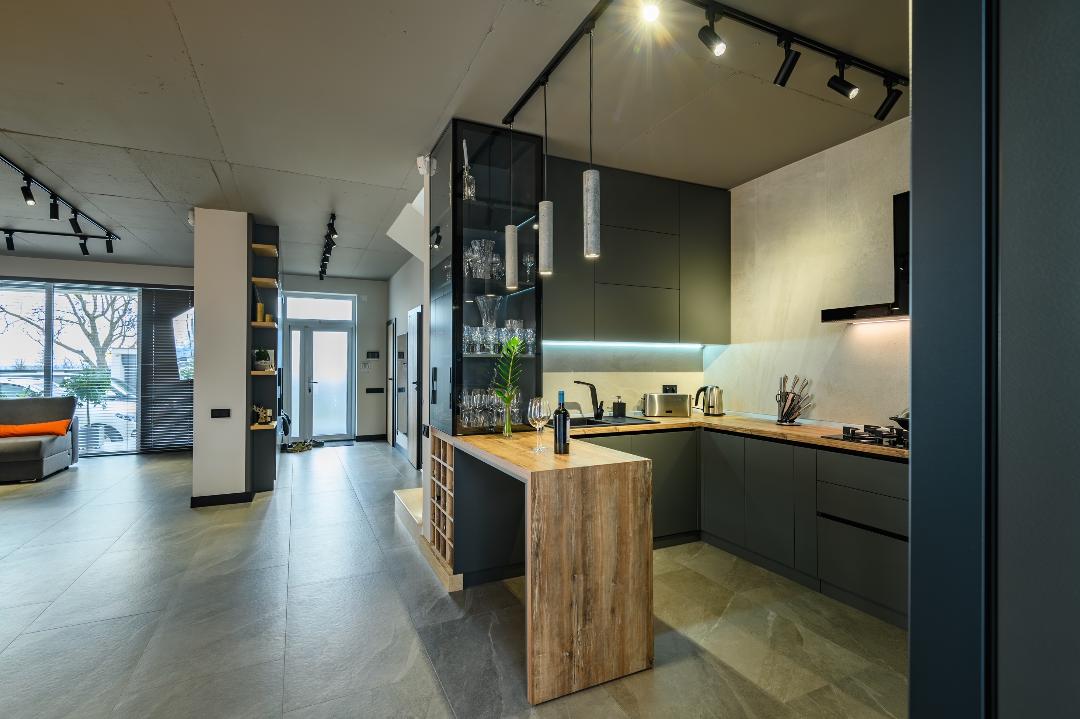
What IKEA Can Teach Garden Centres About Merchandising
Walk into an IKEA showroom and pay attention to what you see.
You won’t find rows of sofas lined up beside rows of coffee tables.
Instead, you’ll find complete living rooms.
The furniture is there, of course, but IKEA understands something important about human behaviour.
People rarely buy products.
They buy possibilities.
A sofa is not really a sofa.
It is movie night with the family.
A dining table is not really a dining table.
It is Thanksgiving dinner.
A home office is not really a desk and chair.
It is productivity, organization, and a vision of who we hope to become.
The most successful retailers understand this principle intuitively.
Many consumers do not purchase products because of what those products are.
They purchase them because of what those products help them imagine.
Garden retail is no different.
The Garden Centre Is In The Dream Business
The horticultural industry often focuses on plants.
Consumers focus on outcomes.
A gardener rarely wakes up on a Saturday morning and thinks:
“I need three echinaceas and two ornamental grasses.”
Instead, she thinks:
- – I want my front entrance to look beautiful.
- – I want more butterflies in my garden.
- – I want colour all summer long.
- – I want my patio to feel welcoming.
- – I want to finally do something with that empty corner.
Those are not plant purchases.
Those are aspirations.
The plants simply become the tools that help achieve them.
This distinction is one of the most important lessons retailers can learn.
The Power of Mental Simulation
One of the most fascinating concepts in consumer psychology is something called mental simulation. Mental simulation occurs when consumers imagine themselves experiencing a future outcome.
Research has shown that people are significantly more likely to take action when they can clearly picture a future result.
The easier it is to visualize success, the easier it becomes to justify a purchase.
Source: Stanford Graduate School of Business, Jennifer Aaker on Storytelling
This explains why model homes sell houses.
Why showroom kitchens sell appliances.
Why destination photography sells vacations.
And why project-based displays often outperform simple product displays.
Consumers are not responding to the product.
They are responding to the future they imagine.
Why Categories Often Fail To Inspire
Many retail environments are organized according to operational logic.
That makes perfect sense from a management perspective.
Plants are grouped by:
- – Category
- – Pot size
- – Supplier
- – Variety
- – Inventory requirements
The challenge is that consumers do not naturally think this way.
Most shoppers are not asking:
- – Where are the perennials?
- – Where are the grasses?
- – Where are the hydrangeas?
They are asking:
- – What can I do with my patio?
- – How can I attract pollinators?
- – What works in shade?
- – What survives our winters?
The difference may seem subtle.
It is not.
One approach organizes inventory.
The other organizes solutions.
Retail Insight
Consumers often struggle to imagine what a plant will become.
They rarely struggle to imagine what a beautiful front entrance, colourful patio, or pollinator garden might look like.
The more clearly the outcome is presented, the easier the purchase becomes.
Why Project-Based Merchandising Works
Imagine two displays.
The first contains:
- – Salvia
- – Echinacea
- – Rudbeckia
- – Ornamental grasses
All healthy.
All properly labelled.
All available for sale.
The second contains the exact same plants.
But the display is titled:
Pollinator Paradise
Accompanied by photography showing butterflies, bees, and a colourful summer garden.
The products are identical.
The presentation is not.
The second display immediately answers a question many consumers may not even realize they are asking:
“What can I create with this?”
This reduces uncertainty and increases confidence.
Consumers no longer need to connect the dots themselves.
The display has already done part of the work.
Apple, IKEA, and Luxury Retail All Use The Same Principle
The most successful retailers in the world rarely focus on features first.
They focus on outcomes.
Apple does not lead with processor speeds.
It leads with experience.
Luxury automotive brands do not sell horsepower.
They sell status, confidence, comfort, and identity.
IKEA does not sell furniture.
It sells possibility.
Garden centres have an opportunity to do exactly the same thing.
Instead of leading with product characteristics, they can lead with outcomes.
Examples include:
- – Pollinator Garden Collection
- – Four-Season Colour Collection
- – Cottage Garden Collection
- – Front Entrance Collection
- – Easy-Care Perennial Collection
These are not simply merchandising strategies.
They are decision-making tools.
Why This Matters More Than Ever
Today’s consumers are overwhelmed with information.
They are comparing products online.
Watching videos.
Reading reviews.
Scrolling social media.
Researching before they ever visit a store.
The challenge is not a lack of information.
The challenge is making sense of it.
Displays that help consumers visualize success perform an increasingly valuable function.
They simplify.
They inspire.
They reassure.
Most importantly, they help consumers move from uncertainty to action.
The Best Retailers Sell The Finished Picture
The strongest merchandisers understand that products rarely create emotional connections on their own.
Finished outcomes do.
Consumers do not fall in love with a perennial sitting on a bench.
They fall in love with the garden they imagine it becoming.
That distinction changes how displays should be built, how signage should be written, and how retailers think about merchandising altogether.
The product matters.
The outcome matters more.
Final Thought
Consumers rarely buy plants because of what they are.
They buy plants because of what they might become.
A colourful patio.
A pollinator garden.
A welcoming front entrance.
A backyard retreat.
The most effective displays help consumers see that future before they ever reach for their wallet.
Because the moment consumers can clearly picture the outcome, the purchase often becomes much easier.
In the end, garden centres are not simply selling plants.
They are helping people imagine a better version of the spaces they call home.