
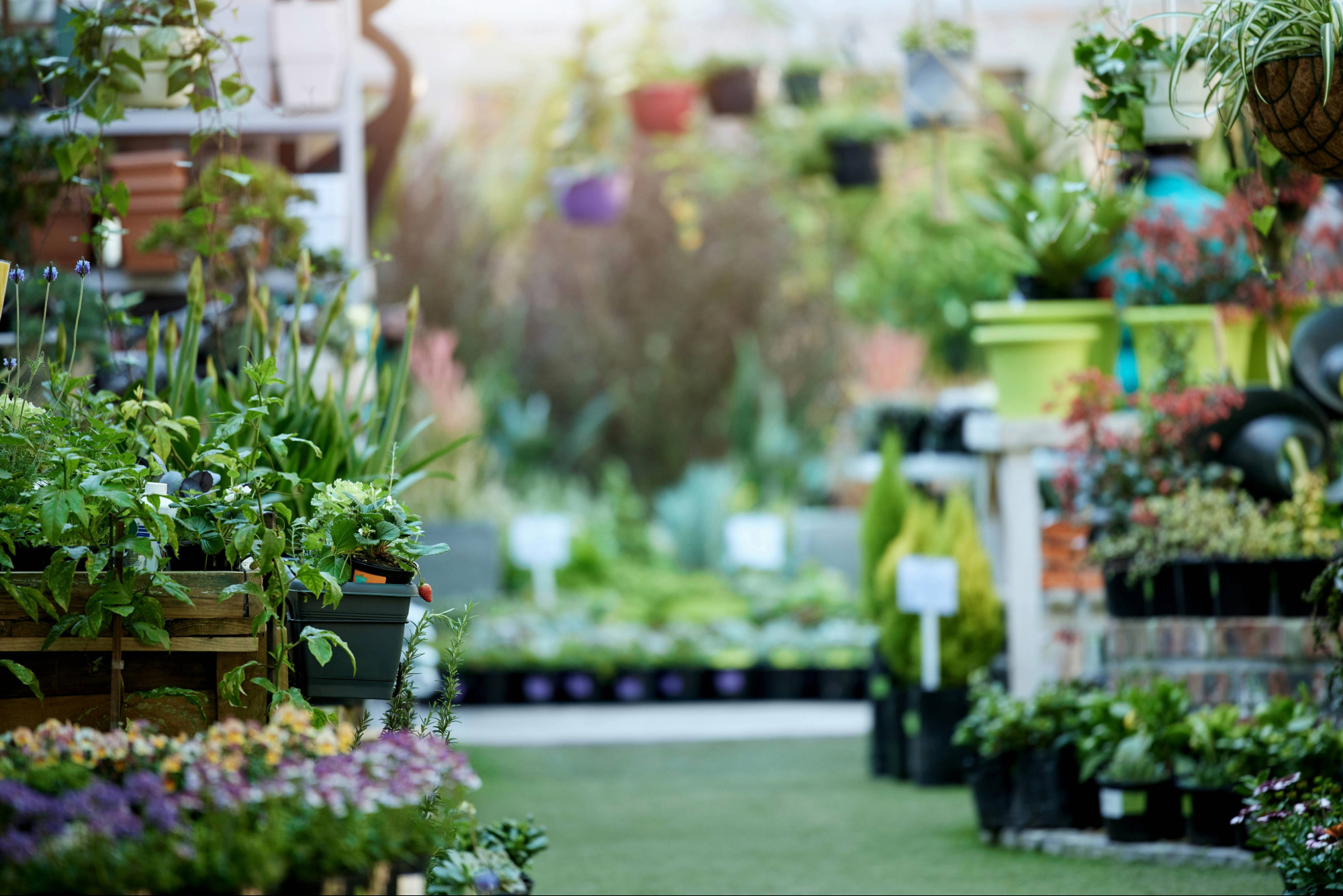
Consumers Shop by Outcome, Not by Category
Understanding How Modern Garden Centre Shoppers Really Make Decisions
For years, garden centres have largely been organized around operational logic. Plants are grouped by category, supplier, pot size, or growing program because that is how the industry thinks about inventory. But consumers do not think like growers. They think like homeowners.
A shopper is far more likely to say:
- – “I need colour for my front porch.”
- – “I want something easy to take care of.”
- – “I’d love my backyard to feel more relaxing.”
- – “I need flowers that survive full sun.”
In other words, consumers shop by outcome, not by category.
And increasingly, research suggests that the retailers who understand this behavioural shift are the ones best positioned to grow sales, increase basket size, and create more emotionally engaging shopping experiences.
Garden Centres Are More Emotional Than Most Retailers Realize
Unlike hardware or grocery shopping, gardening purchases are deeply emotional. Plants are connected to pride, creativity, identity, comfort, and home life. Consumers are not simply buying products. They are buying a vision of what their space could become.
Research from Rutgers University found that flowers and plants trigger immediate positive emotional responses and contribute to long-term mood improvement. Participants in the study consistently reported lower stress and greater happiness after receiving flowers or plants. Source: The Emotional Impact of Flowers Study – Rutgers University
That emotional connection shapes behaviour inside the garden centre.
Women between 30 and 60, who represent a major percentage of gardening purchases across North America, tend to shop in ways that closely resemble home décor and fashion consumers. The process often begins emotionally and visually before becoming practical and technical.
Consumers respond naturally to:
- – Large blocks of coordinated colour
- – Flowering focal points
- – Lifestyle-inspired displays
- – Curated patio collections
- – Products grouped around simple outcomes
They are not simply comparing plants. They are imagining how those plants might change a space they care about.
Consumers Shop in Clusters
One of the most interesting behavioural patterns in garden retail is that consumers rarely shop methodically aisle by aisle. Instead, they move through the space in clusters, stopping where visual energy and emotional relevance are strongest.
Research rooted in Gestalt psychology shows that the human brain processes grouped visual information more efficiently than scattered information. Source: Gestalt Principles and Visual Perception – Interaction Design Foundation
This helps explain why a massed hydrangea display or a coordinated perennial collection often outperforms the exact same product spread thinly across multiple benches.
Consumers instinctively respond to displays that feel:
- – Abundant
- – Organized
- – Easy to interpret
- – Visually complete
Retail researchers often refer to this as “visual fluency.” The easier something is to mentally process, the more positively consumers respond to it.
A study published in the Journal of Retailing found that visually cohesive merchandising increases perceived product value and consumer trust.
Source: Visual Presentation and Consumer Response – Journal of Retailing
This is especially important in gardening because consumers often lack full technical confidence. Most shoppers do not know the difference between cultivars, bloom cycles, or hardiness zones. What they do know is what feels approachable and inspiring.
The Industry Often Overestimates the Consumer’s Knowledge
One of the great disconnects in horticulture is that the industry tends to assume consumers understand far more than they actually do.
Growers and retailers naturally speak in technical language:
- – Perennials
- – Annuals
- – Zone ratings
- – Habit structure
- – Reblooming characteristics
Consumers often do not. In many cases, shoppers are making decisions based on:
- – Colour compatibility
- – Ease of care
- – Sun exposure
- – Pollinator appeal
- – Seasonal longevity
This matters because complexity creates hesitation.
One of the most widely cited studies in consumer psychology, conducted by Columbia University researchers Sheena Iyengar and Mark Lepper, found that consumers presented with too many options were dramatically less likely to make a purchase.
Source: When Choice Becomes Demotivating – Columbia University Study
The study revealed that larger assortments attracted attention but reduced conversion.
Garden centres encounter this exact challenge every spring.
Consumers may initially be excited by hundreds of plant options, but excitement can quickly become fatigue when every decision feels uncertain:
- – Which one survives winter better?
- – Which one blooms longer?
- – Which one is easiest to maintain?
- – Which one actually works in my garden?
Without guidance, uncertainty quietly builds.
And uncertainty is one of the biggest hidden barriers to sell-through in garden retail.
The Three Shopping Zones of the Modern Garden Centre
One of the more overlooked aspects of consumer behaviour in horticulture is that shoppers behave differently depending on where they are physically standing within the garden centre itself.
Most modern garden centres are made up of three primary retail zones:
- – The bench
- – The apron
- – The corral
Each serves a different psychological and behavioural purpose.
The Bench
The bench is where consumers slow down and browse. This is the traditional shopping environment inside the garden centre itself, where customers compare colour, texture, fragrance, and plant combinations.
Here, consumers are more exploratory. They are gathering ideas, imagining combinations, and often expanding beyond their original shopping intention. This area functions similarly to browsing in a fashion boutique or home décor showroom.
Because consumers linger longer in bench environments, merchandising strategy matters enormously. Cohesive displays, colour blocking, and grouped collections tend to outperform fragmented assortments because they reduce visual noise and create easier pathways for inspiration.
The Apron
The apron, or front-of-store area, serves a very different role. This is often where impulse behaviour begins.
Consumers entering the store are still transitioning mentally from parking lot to shopping mode. Bright colour, large floral displays, and strong visual statements help establish emotional energy immediately.
Research in retail psychology consistently shows that first visual impressions heavily influence shopping behaviour and dwell time. In many ways, the apron acts as the “movie trailer” for the entire garden centre experience.
Strong apron merchandising can:
- – Increase traffic flow into the garden centre
- – Trigger impulse purchasing
- – Create seasonal excitement
- – Establish a perception of abundance and freshness
This is why flowering annuals, hanging baskets, and highly visual colour programs often perform best in these spaces.
The Corral
The corral, typically the fenced outdoor area extending into the parking lot, operates differently again. This environment often supports larger-format purchases and higher-volume shopping behaviour.
Consumers psychologically perceive corral spaces as more transactional and opportunity-driven. Here, shoppers are more likely to purchase:
- – Trees and shrubs
- – Bulk seasonal colour
- – Patio planters
- – Soil and garden accessories
- – Larger landscape-oriented products
Interestingly, corrals also create a subtle “event retail” feeling. Because they are seasonal and temporary, they signal urgency and limited-time opportunity. This taps into the same behavioural dynamics seen in pop-up retail environments.
Research from the National Retail Federation has shown that temporary and seasonal retail environments can increase urgency-driven purchasing behaviour because consumers perceive them as less permanent and more time-sensitive.
Source: Consumer View Winter 2023 – National Retail Federation
When all three zones work together cohesively, the garden centre becomes more than a retail space. It becomes a guided consumer journey.
Garden Centres Are Becoming Experience-Based Retail
Consumers increasingly expect retail environments to feel intuitive, inspiring, and easy to navigate. This is especially true in categories connected to the home.
A PwC consumer insights study found that 73 percent of consumers say customer experience plays a major role in purchasing decisions, often outweighing price itself.
Source: Future of Customer Experience Survey – PwC
This creates a major opportunity for garden centres willing to rethink how they merchandise and communicate.
The retailers seeing the strongest engagement increasingly focus on:
- – Visual storytelling
- – Curated experiences
- – Simplicity of navigation
- – Emotional inspiration
- – Outcome-based merchandising
The garden centre of the future will not simply be organized around inventory management.
It will be organized around consumer behaviour.
Final Thought
Consumers are not entering garden centres looking for categories, pot sizes, or production terminology.
They are looking for inspiration they can confidently act on.
They shop visually before logically.
Emotionally before technically.
By outcome before by classification.
The retailers who understand this shift will create environments that feel easier to shop, more emotionally rewarding, and ultimately more successful at converting inspiration into sales.
Because in the end, consumers are not just buying plants.
They are buying the feeling of what those plants might become.