
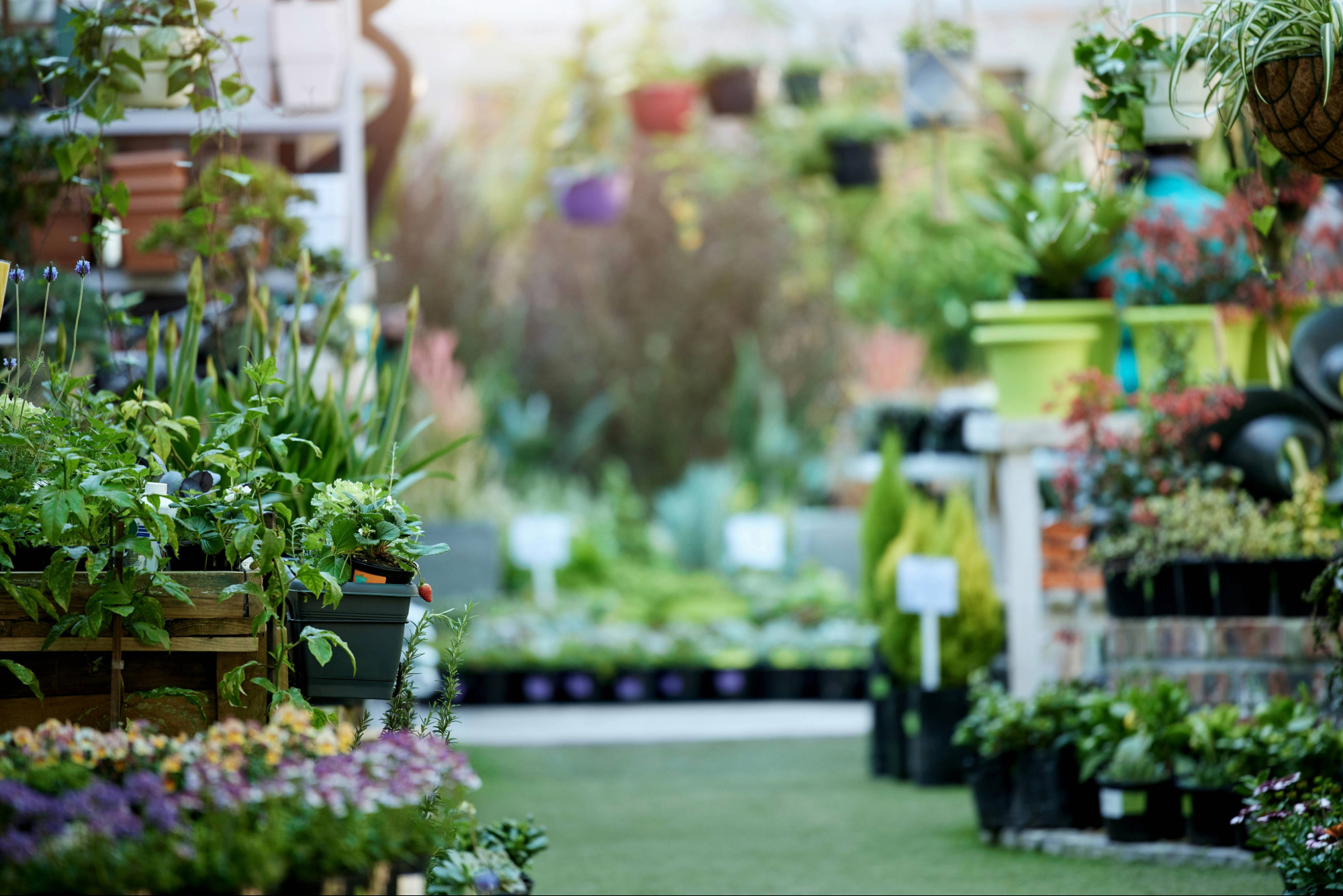
Why the First Five Seconds Matter in Garden Retail
A customer walks into a garden centre.
Before they read a plant tag, before they compare prices, before they ask whether something will survive a Canadian winter, something much more primitive happens.
They look.
Their eyes move.
Something catches them.
Something else disappears.
And without consciously deciding to do it, they begin editing the store.
This plant matters.
That display does not.
Look over there.
Keep walking.
Retailers spend enormous amounts of time thinking about what happens after a customer becomes interested in a product.
We explain features.
We provide signage.
We develop plant tags.
We train employees.
We create promotions.
We discuss price.
But none of those things can influence a customer who never looks at the product in the first place.
That makes attention one of the strangest currencies in retail.
You cannot put it on a balance sheet.
Yet almost nothing happens without it.
Before There Is a Sale, There Is a Glance
Consumer behaviour is sometimes described as though shoppers calmly proceed through a sequence.
See product.
Gather information.
Evaluate alternatives.
Make decision.
Purchase.
Actual shopping is considerably messier.
A modern retail environment contains thousands of visual stimuli competing simultaneously for a limited amount of human attention.
Products.
Colours.
Signs.
Prices.
Packaging.
People.
Displays.
Phones.
Aisles.
Promotions.
The customer cannot consciously process all of it.
So the brain filters.
Most things are ignored.
A few things are noticed.
An even smaller number receive sustained attention.
This distinction matters because research using eye-tracking technology has repeatedly demonstrated a close relationship between what people visually attend to and what they ultimately consider or purchase.
A shopper cannot seriously evaluate every product in a store.
First, something has to make the cut.
That makes the first job of merchandising remarkably simple:
Get seen.
Horticulture Should Be Brilliant at This
There is something almost unfair about the advantage garden retailers have.
Most consumer products require packaging to make themselves visually interesting.
Breakfast cereal needs colourful boxes.
Cosmetics require elaborate containers.
Fashion retailers spend fortunes on mannequins, photography and window displays.
Plants arrive with much of their visual merchandising already built in.
Flowers.
Colour.
Texture.
Movement.
Form.
Scale.
Seasonality.
A flowering perennial is simultaneously the product and part of the advertisement for the product.
A rose in bloom does not need a photograph explaining what a rose in bloom looks like.
The merchandise can perform that job itself.
And yet this advantage can easily be squandered.
Because a garden centre rarely contains one beautiful plant.
It contains hundreds or thousands of them.
That creates a fascinating retail problem.
Beauty can become background noise.
When Everything Is Beautiful, Nothing Is Necessarily Important
Walk through a busy garden centre in May.
There may be roses in flower.
Clematis climbing.
Peonies opening.
Fruit plants leafing out.
Perennials filling benches.
Hanging baskets overhead.
Annuals forming oceans of colour.
Shrubs.
Trees.
Planters.
Racks.
Signs.
Price cards.
Promotional material.
Shopping carts.
Employees moving product.
Customers moving through aisles.
Everywhere you look, something is asking to be noticed.
Individually, many of these elements are attractive.
Collectively, they can compete with one another.
This is the visual equivalent of a room in which everyone is talking.
The solution is not necessarily to make everybody louder.
It is to decide who gets the microphone.
That is what visual merchandising really does.
It creates priorities for the eye.
The Eye Does Not Read the Store Like a Spreadsheet
Retailers often think about displays from very close range.
We stand beside a rack.
We straighten the pots.
We read the sign.
We inspect the tag.
We check the price card.
From that distance, the details matter.
But customers do not begin shopping from two feet away.
They approach.
This changes the economics of what information is useful.
From twenty feet away, a plant tag is almost irrelevant.
The customer cannot read:
Hardiness Zone 4.
Mature Height 1.2 metres.
Full Sun.
Blooms June to September.
Those details may become extremely important later.
But first the shopper has to walk those twenty feet.
At that distance, something else is doing the selling.
Colour.
Scale.
Contrast.
Shape.
Repetition.
Movement.
Mass.
The silhouette of the display.
The quantity of visual energy concentrated in one place.
Retail merchandising therefore happens at different distances.
And each distance has a different job.
The Twenty-Foot Problem
Try a simple experiment.
Build a plant display exactly as you normally would.
Then walk twenty feet away.
Do not read anything.
Look at it for two or three seconds.
What survives?
Perhaps a block of yellow flowers.
Perhaps a large header sign.
Perhaps the vertical structure of flowering vines.
Perhaps nothing in particular.
That last possibility should be taken seriously.
A display can contain excellent plants, excellent information and excellent pricing while being almost invisible at distance.
It is possible to build a display that works perfectly once the shopper reaches it but provides no compelling reason for the shopper to get there.
That is a merchandising failure that product quality alone cannot fix.
Visual Mass Changes Importance
Put one flowering salvia on a large garden-centre bench.
It is a plant.
Put thirty flowering salvias together and something changes.
The eye reads the group differently.
It has mass.
It appears intentional.
It occupies visual territory.
Retailers in almost every category use repetition because repetition gives merchandise visual weight.
Think about a produce department.
A mountain of oranges creates a stronger visual statement than twelve oranges scattered across several shelves.
The same inventory principle appears constantly in fashion, grocery, cosmetics and home improvement retail.
Horticulture has an unusual ability to exploit it because plants naturally generate colour and form.
A concentrated block of flowering material can be visible from astonishing distances.
But mass does something beyond attracting the eye.
It communicates importance.
The display appears to say:
Something is happening here.
That is a powerful sentence in retail.
The Garden Centre Eye-Tracking Experiment
Several years ago, researchers Patricia Huddleston, Mary Tuski Coveyou and Bridget Behe decided to study garden-centre shoppers in an unusually literal way.
They watched what shoppers watched.
Customers in four Michigan garden centres wore mobile eye-tracking glasses while shopping for a live plant.
The resulting recordings allowed researchers to examine what consumers actually paid attention to as they moved through a real retail environment.
Not what shoppers later remembered seeing.
Not what they claimed was important.
What their eyes actually encountered.
Researchers analyzed 150 usable shopping videos.
For shoppers purchasing annual plants, more than 90 percent of their measured department time was spent in the area from which they eventually purchased.
That may sound obvious.
It is not.
It tells us how much economic activity can be concentrated in the relatively small portion of a garden centre that successfully earns attention.
The same research found consumers actively interacted with plants. Nearly every participant viewed plant tags or informational signs, and shoppers encountered both price and non-price signage during the journey.
But first they had to reach the merchandise.
Attention opened the door.
The information came afterward.
Looking and Buying Are Remarkably Close Neighbours
Another eye-tracking study followed consumers shopping in real supermarkets.
The researchers wanted to understand what influenced attention.
Some factors belonged to the shopper.
Brand preference.
Price sensitivity.
Personal goals.
Other factors belonged to the environment.
Product placement.
Visual prominence.
Number of facings.
Shelf position.
Not surprisingly, both mattered.
People look partly because something attracts them and partly because they are already interested in it.
But one finding was particularly striking.
Visual attention itself was an extremely strong predictor of purchasing.
Products looked at longer or more frequently were considerably more likely to be chosen.
This does not mean staring at a hydrangea magically forces someone to buy it.
The relationship works in both directions. Interested shoppers naturally look more.
But commercially, the implication is still important.
Attention and purchase are intimately connected.
The merchandise that repeatedly enters the customer’s visual field has opportunities the invisible merchandise never receives.
Movement Is the Enemy of Detail
There is another useful finding from in-store eye-tracking research.
Shoppers tend to devote more visual attention when their bodies are relatively stationary.
When people are moving, visual inspection decreases.
Again, this feels obvious only after someone measures it.
A walking shopper and a stopped shopper are psychologically different customers.
The moving customer is scanning.
The stopped customer is inspecting.
Those two moments require different merchandising strategies.
The moving customer needs a reason to stop.
The stopped customer needs a reason to stay.
That means the large visual elements of a display have one task:
interrupt movement.
Once that happens, smaller information can begin working.
The plant tag does not need to stop someone from twenty feet away.
That is not its job.
The display stops them.
Then the tag explains.
Merchandising Has a Sequence
Good displays often work almost like a conversation.
From a distance:
Look here.
A little closer:
This is interesting.
Closer still:
Here is what it is.
Now examining the plant:
Here are the details.
This is visual hierarchy.
The retailer controls, or at least influences, the order in which information becomes available.
Poor merchandising often ignores this sequence.
Everything receives equal visual emphasis.
A product sign competes with a price burst.
A collection name competes with several handwritten notices.
Individual plant tags compete with banners.
Promotional graphics compete with the plants themselves.
The shopper gets information without hierarchy.
Good visual merchandising creates layers.
The important message survives at distance.
The secondary message becomes visible closer in.
Detailed information rewards inspection.
The eye is guided rather than assaulted.
More Signs Can Create Less Communication
This is one of retail’s great temptations.
Something is not selling.
Add a sign.
Customers appear confused.
Add another sign.
A promotion needs explanation.
Another sign.
Pretty soon the merchandising solution resembles somebody pinning Post-it notes all over a windshield.
Signage can absolutely direct visual attention. Research has demonstrated that strategically placed in-store signs can affect where customers look and, under some conditions, sales.
But a sign occupies visual space.
Every sign therefore has an opportunity cost.
It may attract attention to itself while taking attention away from something else.
The question should not simply be:
Do we need a sign?
It should be:
What do we want the shopper to notice first?
Sometimes that should be the sign.
Sometimes it should be the flower.
Those are different merchandising decisions.
Colour Is Commercial Infrastructure
Garden retailers sometimes treat colour as decoration.
That understates its importance.
Colour is one of the primary ways horticultural merchandise announces itself at distance.
A customer approaching a flowering display may know nothing about the cultivars involved.
They may not know whether the plants are hardy.
They may not know the genus.
They may not know the price.
But they can see pink from thirty feet away.
This makes colour commercially useful before product knowledge begins.
A concentrated colour block can establish location.
It can create contrast.
It can provide a visual destination.
It can separate one merchandise zone from another.
It can make a relatively small display appear important.
In most retail categories, companies manufacture this effect with packaging.
In horticulture, we grow it.
That should influence how we merchandise.
Contrast Is More Powerful Than Volume
Suppose every display in a garden centre uses large bright signs.
A new large bright sign is unlikely to dominate.
Suppose every plant is merchandised in blocks of mixed colour.
A slightly larger mixed-colour block may not look especially different.
Attention often depends on contrast.
Large against small.
Colour against green.
Vertical against horizontal.
Open space against density.
Movement against stillness.
One dominant message against relative quiet.
The important lesson is that visibility is relational.
A display is not visually strong in isolation.
It is strong relative to its surroundings.
That means merchandising should be evaluated from the shopper’s visual field, not simply from the dimensions of the fixture.
Empty Space Can Sell
Retailers are understandably reluctant to leave space unused.
Selling space costs money.
Why leave part of a display visually quiet when another product could fit there?
Because sometimes space is what allows the product beside it to be seen.
Luxury retailers understand this intuitively.
They rarely cram thirty handbags onto a premium presentation table.
Space creates emphasis.
In horticulture, we obviously operate under different economics. Garden centres require substantial inventory density.
But the principle still matters.
If every inch of visual space is equally busy, the shopper has difficulty identifying focal points.
Strategic breathing room can make a hero display appear larger without adding a single plant.
Sometimes the cheapest merchandising material in the building is simply nothing.
Eye Level Is Not the Whole Story
Retailers frequently talk about eye-level placement.
There is good reason for that.
Shelf position influences visibility.
But garden centres are unusual physical spaces.
Plants sit on benches.
Some stand on racks.
Some climb vertically.
Some hang overhead.
Some create walls.
Some spill over edges.
The category therefore offers something conventional packaged-goods retail does not:
three-dimensional merchandising.
That opens interesting possibilities.
Height can interrupt a horizontal visual field.
Trailing material can create movement.
Flowering vines can produce vertical destinations.
Repeated containers can create rhythm along an aisle.
Large specimen plants can establish landmarks.
The garden centre does not need to think like a supermarket shelf.
It can behave more like a landscape.
That may be one of the industry’s greatest merchandising opportunities.
Build Landmarks, Not Just Displays
Most customers do not consciously memorize a retail floor plan.
They navigate through landmarks.
The giant flowering display.
The wall of roses.
The hanging baskets.
The fruit-tree area.
The enormous hydrangeas near the entrance.
These landmarks help organize the shopping environment visually.
They also create memory.
A shopper may not remember aisle numbers.
They remember:
Those beautiful red roses near the front.
That is useful because a memorable visual landmark can perform several jobs simultaneously.
It attracts.
It orients.
It communicates abundance.
It gives shoppers something to talk about.
It may even pull customers farther into the store.
The strongest garden centres often contain several of these visual anchors.
Not fifty.
Several.
If everything becomes a landmark, nothing is.
The Entrance Is an Advertisement for the Store
Stand outside a garden centre before opening and look toward the entrance.
Forget that you work there.
Forget what inventory is supposed to be where.
Ask only:
What does this scene promise?
Excitement?
Abundance?
Seasonality?
Newness?
Colour?
Or does the customer’s first visual encounter consist mostly of fixtures, signs, carts and operational equipment?
The entrance has an unusual role because it communicates before shoppers have committed much attention to the store.
It is effectively an advertisement made out of merchandise.
That first impression influences where the eye travels next.
Retailers frequently reserve their best creative thinking for individual product presentations.
It may be more valuable to start with the view.
Do the Five-Second Test
There is no magical scientific rule stating that every garden-centre display has precisely five seconds to succeed.
But five seconds is a useful discipline.
Stand somewhere a customer naturally approaches from.
Look at the display for five seconds.
Then turn away.
Ask yourself:
- What did I notice first?
- What colour or shape dominated?
- Was there a clear focal point?
- Did the plants or the signage win?
- Could I tell where I was supposed to look?
- Did anything make me want to move closer?
- Was there one strong visual message or several competing ones?
- If I knew nothing about plants, would I still find this interesting?
Notice what those questions do not ask.
They do not ask about hardiness.
They do not ask about pruning.
They do not ask whether the plant tag contains enough information.
Those questions come later.
This test examines whether the customer ever reaches later.
Attention Is Scarcer Than Shelf Space
Retailers traditionally think shelf space is scarce.
In a garden centre, bench space is scarce.
Rack space is scarce.
Floor space is scarce.
All true.
But the scarcest resource may be the shopper’s attention.
A store can add another rack.
It cannot add another hour to the customer’s afternoon.
It cannot force someone to inspect every display.
It cannot require a shopper to read every sign.
The customer’s attention belongs to the customer.
Retailers compete for fractions of it.
This makes merchandising less about displaying everything equally and more about deciding what deserves to be noticed.
Which plants should visually dominate this week?
Where should colour be concentrated?
Which display deserves the strongest position?
Where is the eye supposed to travel?
What should disappear temporarily so something more important can emerge?
Those are not decorative questions.
They are allocation questions.
And allocation is economics.
The Product Nobody Notices Has No Chance to Be Excellent
The horticultural industry spends enormous amounts of time making plants better.
Better genetics.
Stronger flowering.
Improved disease resistance.
Better branching.
Longer bloom periods.
Greater hardiness.
More compact habits.
Those advances matter enormously.
But there is an awkward reality at retail.
A genetically superior plant that visually disappears into the environment can lose to a less remarkable product that earns the shopper’s attention.
The customer cannot reward an advantage they never stop to investigate.
That means horticultural innovation and retail presentation are not separate worlds.
One creates value.
The other makes sure somebody notices it.
Perhaps that is the simplest way to think about the first few seconds in garden retail.
The first job is not to explain the plant.
The first job is to earn permission to explain it.
Get the glance.
Create the stop.
Invite the shopper closer.
Then let everything else begin.
Because before a plant can be considered, compared, understood or purchased, one very small thing has to happen.
Someone has to look at it.
Sources
Visual Cues During Shoppers’ Journeys: An Exploratory Paper
Patricia Huddleston, Mary Tuski Coveyou and Bridget K. Behe, 2023.
Looking Is Buying: How Visual Attention and Choice Are Affected by Consumer Preferences and Properties of the Supermarket Shelf
Milica Gidlöf, Annika Wallin, Richard Dewhurst and Kenneth Holmqvist, 2017.
Vision (Im)possible? The Effects of In-Store Signage on Customers’ Visual Attention
Tobias Otterbring and colleagues, 2014.
Spotlighting Customers’ Visual Attention at the Stock, Shelf and Store Levels with the 3S Model
Tobias Otterbring, Erik Wästlund and Poja Shams, 2019.
More Bodily Motor Action, Less Visual Attention: How Supermarket Stimuli and Consumer-Related Factors Influence Gaze Behavior
Consumer retail eye-tracking researchers, 2021.
Visual Attention and Product Interaction: A Neuroscientific Study on Purchase Across Two Product Categories in a Virtual Store
Enrique Bigné and colleagues, 2024.
Utilising Eye-Tracking Data in Retailing Field Research: A Practical Guide
Journal of Retailing researchers, 2024.