
The Garden in Your Head: Why Imagination May Be Horticulture’s Most Powerful Sales Tool
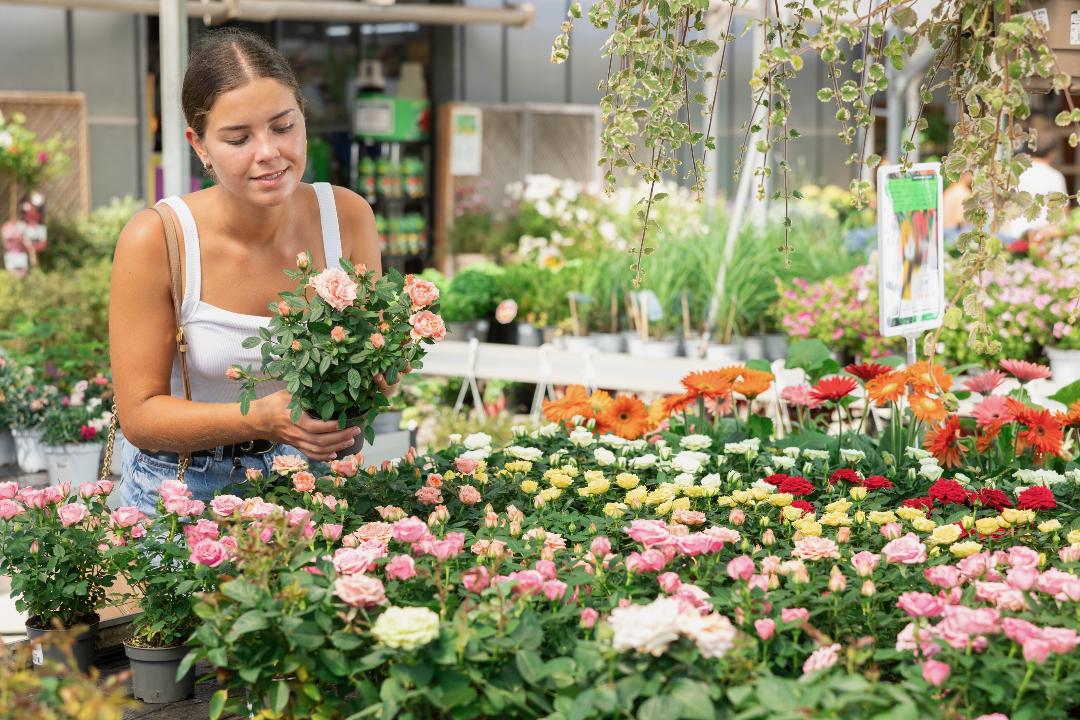
A customer is standing in front of a clematis.
Technically, they are looking at a plant in a pot.
Perhaps two feet tall.
A few flowers.
A tag.
A bamboo cane.
Roots contained in several litres of growing medium.
That is what is physically in front of them.
But that may not be what they are buying.
In their mind, something else can happen.
The bamboo cane disappears.
The plastic pot disappears.
The garden centre disappears.
The clematis climbs eight feet up the fence beside their patio.
It flowers.
The bare fence is gone.
There is colour outside the kitchen window.
Their backyard looks different.
Nothing has actually happened.
And yet, psychologically, quite a lot has happened.
The customer has visited the future.
Consumer researchers call this kind of process mental simulation.
We do it constantly.
We imagine driving the car.
Wearing the jacket.
Sitting on the new sofa.
Walking into the renovated kitchen.
Taking the vacation.
Using the product.
And when consumers can vividly imagine a future experience, the imagined experience can influence what they do in the present.
For horticulture, that may be extraordinarily important.
Because almost everything we sell is unfinished.
We Sell Some Assembly Required
Not assembly in the IKEA sense.
Something more interesting.
A plant at retail is rarely the final product.
The rose will become larger.
The fruit tree may eventually carry fruit.
The perennial will spread.
The clematis will climb.
The shrub will fill the empty corner.
The small blueberry plant may become part of a family ritual every July.
We sell products whose greatest benefits often exist months or years beyond the checkout.
That creates an unusual marketing challenge.
The consumer must mentally cross a gap between:
what the plant is now
and
what the plant might eventually become.
Some customers cross that gap easily.
Experienced gardeners are good at it.
They look at a young plant and see its future architecture almost automatically.
They understand mature height.
They know how quickly something grows.
They can picture flowering periods.
They understand what three feet of spread actually means in a border.
The novice has a harder job.
They may simply see:
a plant in a pot.
If so, horticultural marketing has left much of the product invisible.
The Product Exists Twice
Perhaps every plant at retail exists in two forms.
There is the physical plant.
Then there is the imagined plant.
The physical plant occupies fifteen centimetres of bench space.
The imagined plant might cover an entire fence.
The physical blueberry contains no ripe fruit.
The imagined blueberry has children picking berries from it.
The physical peony may have three stems.
The imagined peony produces armfuls of flowers.
The physical shrub sits in black plastic.
The imagined shrub sits beside the front entrance of the customer’s house.
Which one carries more value?
Almost certainly the second.
But the second one exists only if the customer can see it.
A Mug Taught Researchers Something Interesting
Ryan Elder and Aradhna Krishna conducted a fascinating series of consumer experiments involving something considerably less romantic than a garden.
A mug.
They discovered that subtle differences in how products were pictured could change consumers’ ability to mentally simulate interacting with them.
For example, when a mug handle was oriented toward the dominant hand of the person viewing it, the image made the act of reaching for the mug easier to mentally rehearse.
That increased purchase intention.
Nothing about the mug itself had changed.
The photograph simply made interaction easier to imagine.
This became known as the visual depiction effect.
The interesting lesson is not that every plant photograph should be rotated toward somebody’s right hand.
It is that product imagery does more than show us what something looks like.
Sometimes it allows us to rehearse ownership.
We briefly experience using the thing before owning it.
That distinction has enormous implications for horticulture.
Stop Photographing Plants Like Mugshots
Open many horticultural catalogues or websites and you will find extraordinarily accurate product photography.
Plant.
White or neutral background.
Plant name.
Perhaps a close-up of the flower.
Useful.
But consider what the image asks the customer to imagine.
Here is the plant.
Now compare that with:
the clematis climbing beside an outdoor dining space
the blueberry on a sunny patio
the rose beside a front entrance
the flowering perennial massed along a walkway
the hydrangea beneath a window
The second type of image is doing additional work.
It supplies context.
Research into contextual imagery has found that product images placed in fitting usage settings can make mental imagery easier to generate, which in turn can improve liking and purchase intention.
The customer does not have to invent the entire scene.
We have given imagination a head start.
Context Is Not Decoration
This is an important distinction.
Lifestyle photography sometimes gets treated as decoration.
Pretty picture.
Nice garden.
Looks good in the catalogue.
But contextual imagery may be performing a much deeper consumer function.
It helps answer:
What would I do with this?
That can be particularly valuable in horticulture because plant use is not always obvious.
An experienced gardener knows what to do with a climbing rose.
The customer may not.
Show the rose alone:
Beautiful plant.
Show it covering an arbour above a seating area:
Possibility.
The difference is not horticultural information.
It is imagined application.
The Consumer Wants to Put Themselves Into the Picture
In 2018, researchers Mark Yim, Tae Hyun Baek and Paul Sauer studied what they called self-transformative consumption vision.
Behind the academic terminology is a wonderfully human idea.
Consumers imagine themselves in a future consumption experience.
Not merely:
I can picture this product.
But:
I can picture myself with this product.
Their work identified dimensions including imagery quality, engrossment, self-projection and the ease with which the imagined experience comes to mind.
The ability to envision oneself in the future experience helped predict purchase intention.
This is particularly fascinating for gardening.
Because the most powerful garden image may not be:
Look at this beautiful garden.
It may be:
I can imagine this being my garden.
Those are subtly different psychological experiences.
Beautiful Can Become Too Beautiful
This creates an interesting danger.
Horticultural marketing loves extraordinary gardens.
Perfect English borders.
Hundred-year-old roses covering stone walls.
Massive estates.
Professionally designed landscapes.
Spectacular photography.
These images are inspirational.
But an extraordinary image can sometimes create distance.
The customer thinks:
Beautiful.
But not mine.
Perhaps I do not own a stone manor.
Perhaps my garden is eighteen feet wide and contains a barbecue, recycling bin and trampoline.
The marketing image demonstrates possibility in general.
It may fail to create possibility personally.
For mental simulation to work, the future has to feel imaginable.
Sometimes an attainable garden may sell better than an astonishing garden.
That is a provocative thought for an industry accustomed to putting its most magnificent photography forward.
Show Me Tuesday Morning
Perhaps we should photograph more ordinary futures.
The blueberry plant on the condominium patio.
The clematis beside the suburban deck.
Three perennials around a mailbox.
The compact rose beside the front steps.
A child holding a handful of strawberries.
Someone cutting flowers for the kitchen table.
These scenes may lack the grandeur of an award-winning landscape.
But they contain something commercially powerful.
They make ownership plausible.
The consumer can enter the picture.
That is the difference between admiration and simulation.
Admiration says:
That’s beautiful.
Simulation says:
I could do that.
Horticulture Is Selling Anticipation
There is another reason this matters.
Gardening contains delay.
Buy the television today and watch it tonight.
Buy the shirt and wear it tomorrow.
Buy the blueberry and the full reward may arrive considerably later.
This means horticultural value often depends on anticipated consumption.
The buyer is enjoying some of the product before the benefit physically arrives.
They imagine the flowers.
The fruit.
The shade.
The privacy.
The fragrance.
The transformed garden.
This imagined future can itself become part of the pleasure of purchasing.
Gardeners know this intuitively.
Buying seeds in February is partly an act of imagination.
The tomatoes do not exist.
But somehow we can already taste them.
That psychological ability to consume the future in advance may be one of horticulture’s greatest commercial assets.
Outcome Simulation Can Reduce Uncertainty
Research into new-product adoption has found another interesting application of mental simulation.
Raquel Castaño, Mita Sujan, Manish Kacker and Harish Sujan studied consumer uncertainty around adopting new products.
Their work distinguished between imagining the outcome of adopting something and thinking about the process involved in getting there.
When adoption lay in the more distant future, encouraging consumers to imagine positive outcomes could reduce uncertainty and improve behavioural intentions.
Plants share an interesting characteristic with new products.
The customer often has incomplete experience with the outcome.
What will this actually look like?
Will I enjoy it?
Will it make enough difference?
Imagining the finished result can help make an uncertain future more concrete.
Sell the Destination Before the Directions
Horticulture frequently begins with process.
Plant in full sun.
Dig a hole.
Water thoroughly.
Mulch.
Prune.
Feed.
All useful.
But imagine buying a vacation this way.
The advertisement opens:
Arrive at airport three hours early.
Remove liquids over 100 millilitres.
Clear security.
Board aircraft.
Sit for nine hours.
Collect baggage.
Take taxi.
Eventually:
Paris.
Tourism marketers rarely begin there.
They begin with Paris.
Then they help you get there.
Perhaps horticulture should occasionally do the same.
First:
Here is what this can become.
Then:
Here is how surprisingly achievable it is.
Destination.
Then directions.
The Garden Centre Can Provide a Glimpse of the Future
There is a physical merchandising opportunity here too.
Consider the difference between displaying six patio fruit plants individually and showing one of them incorporated into a believable patio setting.
Container.
Small table.
Perhaps an image showing mature fruit.
The display is no longer merely saying:
Blueberry.
It is saying:
This could happen here.
That is not the same as the curated-collection strategy we have discussed elsewhere.
The objective is not grouping products around a shopping goal.
The objective here is more psychological.
It is giving the customer material from which to construct a future mental scene.
The merchandise becomes a prop in an imagined life.
Before-and-After May Be One of Horticulture’s Most Powerful Formats
Few industries have a transformation story quite like ours.
Before:
Bare fence.
After:
Flowering clematis.
Before:
Empty patio.
After:
Fruit, herbs and flowers.
Before:
Plain front entrance.
After:
Flowering shrubs and colour.
Before:
Small perennial.
After:
Established garden specimen.
The before-and-after format does something conventional product photography cannot.
It makes time visible.
It allows the consumer to see the gap between today’s purchase and tomorrow’s reward.
And perhaps even more importantly, it supplies the intermediate inference:
This little plant becomes that.
For less experienced consumers, that bridge may be extraordinarily valuable.
Show Scale in a Human Way
There is another persistent horticultural communication challenge.
Three metres.
Ninety centimetres.
One-and-a-half metres wide.
Accurate.
But people are not measuring tapes.
A photograph showing a mature hydrangea beneath a normal house window may communicate mature size more intuitively than a numerical specification.
A climbing rose beside a person creates scale.
A patio fruit plant beside a chair creates scale.
A tree beside a car creates scale.
Numbers tell the customer how large the plant becomes.
Context helps them feel what that size means.
Those two kinds of information should work together.
Video Can Let the Customer Rehearse Ownership
Digital marketing creates even more interesting possibilities.
Research comparing product-presentation videos has found that videos demonstrating product use can produce stronger purchase intentions than videos showing appearance alone, with mental imagery helping explain the effect.
Again, horticulture is unusually suited to this.
Do not simply rotate the plant.
Show:
planting it
placing it beside a patio
harvesting the fruit
cutting the flowers
watching pollinators visit
seeing it return the following spring
The customer is no longer watching a product.
They are watching a future experience.
Short-form video may therefore be particularly powerful for horticultural marketing when it depicts what happens after ownership.
The QR Code Can Become a Time Machine
Imagine scanning a QR code on a young clematis.
Instead of simply reaching specifications, the first thing the customer sees is:
See what this can look like in two years.
Then a photograph.
Perhaps a ten-second video.
Young plant.
Established plant.
Full flowering.
Now the plastic container in the customer’s hand has acquired a history it has not lived yet.
That is a much more interesting use of digital information.
The QR code becomes a small time machine.
But There Is a Catch
Mental simulation is not magic.
A major meta-analysis by Gizem Ceylan, Kristin Diehl and Wendy Wood reviewed decades of research on positive consumption simulation.
Across 237 effects involving more than 40,000 participants, mental simulation produced a positive effect on behaviour.
But the average effect was modest.
And the effectiveness depended on how the simulation was constructed.
This matters.
Simply writing:
Imagine this in your garden
is not guaranteed to increase sales.
Consumers have to be able to generate the image reasonably easily.
Otherwise imagination becomes another task.
Difficult Imagination Can Backfire
This is one of the most fascinating parts of the science.
Research by Petia Petrova and Robert Cialdini has shown that imagining a future event is more persuasive when the mental image is easy to construct.
When the requested scenario becomes difficult to imagine, encouraging simulation can lose effectiveness or even create less favourable responses.
This gives horticultural marketers an important warning.
Do not say:
Imagine transforming your entire landscape into an extraordinary four-season pollinator ecosystem.
That is work.
Instead:
Imagine these beside your front steps.
Easy.
Concrete.
Specific.
The mental picture arrives almost immediately.
That difference matters.
Make the Future Small Enough to See
Horticulture has a tendency to sell enormous ambitions.
Create your dream garden.
Transform your outdoor living space.
Build your backyard oasis.
These statements sound impressive.
But psychologically, they may be too large to simulate.
What exactly does my dream garden look like?
Where do I begin?
What constitutes an oasis?
Smaller futures are easier.
Fresh strawberries from your patio.
Flowers beside the front door.
A clematis covering that fence.
A rose you can cut for the kitchen.
Shade beside the deck.
The future becomes tangible.
The customer can see it.
Perhaps small imagination creates large purchases.
Use the Consumer’s Garden, Not Ours
This opens an exciting possibility for digital horticulture.
Imagine a customer photographing their own garden space.
Empty fence.
Patio.
Front entrance.
Balcony.
Then digital tools help them visualize plants within that real environment.
Augmented reality already allows furniture buyers to place virtual sofas inside their homes.
There is no fundamental reason horticulture cannot increasingly do the same.
What would this hydrangea look like beneath my window?
How large will this shrub become?
What happens if three of these are planted together?
What would that rose look like against my fence?
The closer the imagined garden becomes to the consumer’s actual garden, the less imaginative work they have to perform.
That could become a meaningful frontier in garden retail.
Mature Photography Should Be Treated as Product Information
Suppliers sometimes view mature-garden photographs primarily as marketing assets.
Perhaps they should also be treated as technical information.
A photograph of a mature plant can communicate:
habit
scale
flower density
garden role
texture
proportion
application
in one glance.
That makes mature imagery particularly important when retailing young plants whose current appearance poorly represents their ultimate value.
A consumer evaluating a small fruit plant may be economically valuing something they cannot yet see.
The mature image helps make the invisible product visible.
There Is a Difference Between Showing and Simulating
This is a subtle but important distinction.
A photograph shows:
Here is a beautiful rose.
A simulation-oriented photograph suggests:
Here is what having this rose might feel like.
The second may include:
a hand cutting the flower
the rose growing beside an entrance
flowers in a vase
a person nearby for scale
a familiar residential setting
The difference is the implied verb.
The first photograph says:
Look.
The second says:
Live.
That changes the role of imagery from product documentation to behavioural rehearsal.
Language Can Simulate Too
Photography is not the only tool.
Words can create mental imagery.
Compare:
Produces edible fruit in summer.
with:
Pick your own blueberries from the patio in July.
Both communicate a similar attribute.
The second contains a scene.
Or:
Suitable for cut flowers.
versus:
Cut fresh flowers for the kitchen table all summer.
Again, a scene.
Good consumer copy often contains a quiet invitation into the future.
Not flowery prose.
Concrete experiences.
Pick.
Cut.
Sit.
Watch.
Harvest.
Smell.
Enjoy.
The verbs matter because they give the consumer something to mentally do.
The Best Benefit May Be a Moment
Marketers often describe product benefits abstractly.
Privacy.
Colour.
Fragrance.
Edible gardening.
Pollinator value.
All legitimate.
But perhaps some of those benefits become more powerful when converted into moments.
Privacy becomes:
Coffee on the patio without looking directly into the neighbour’s yard.
Fruit becomes:
Your child picking the first strawberry.
Fragrance becomes:
Smelling the rose when you walk past the front door.
Cut flowers become:
Bringing a handful inside on Saturday morning.
Now the benefit is not a concept.
It is an experience.
Human beings consume experiences.
Do Not Overwrite the Customer’s Imagination
There is another danger.
If marketing defines the future too precisely, it can accidentally exclude people.
A photograph of a giant country garden may make an urban customer think:
Not for me.
An image centred on one particular family type may reduce identification for others.
A highly stylized environment may feel unattainable.
So simulation-oriented marketing needs enough specificity to make imagining easy, but enough openness for consumers to insert themselves.
That balance is delicate.
We are building the stage.
The customer still has to be able to walk onto it.
Five Questions for Horticultural Marketers
Take any product and ask:
- Are we showing what the plant is, or what it becomes?
- Can the customer easily imagine this in a familiar garden setting?
- Do our photographs provide useful context and scale?
- Does our language create a concrete future experience?
- Is the imagined outcome simple enough for the customer to picture immediately?
Then ask the most revealing question:
If I knew very little about plants, could I see why I would want this one in my life?
That is not the same as understanding its features.
It is understanding its future.
We Sell Tomorrow
There is something wonderfully peculiar about selling plants.
The customer pays today.
Much of the value arrives later.
The rose has more flowers ahead of it than behind it.
The tree has more growth ahead.
The blueberry has future harvests.
The perennial has springs it has not yet emerged into.
In this sense, horticultural retail is partly the business of selling tomorrow.
And tomorrow is invisible.
So the consumer has to construct it.
Our photographs can help.
Our words can help.
Our displays can help.
Our digital tools can help.
But ultimately, something remarkable has to happen inside the shopper’s mind.
The plastic pot disappears.
The retail bench disappears.
The young plant grows.
The fence becomes covered.
The berries ripen.
The flowers open.
The customer sees something that does not yet exist.
And for a brief moment, they own it.
Perhaps that is when the real sale begins.
Not when the customer sees the plant.
When they see their future with it.
Sources
Imagery and Information Processing
Deborah J. MacInnis and Linda L. Price, 1987.
The Use of Visual Mental Imagery in New Product Design
Darren W. Dahl, Amitava Chattopadhyay and Gerald J. Gorn, 1999.
Fluency of Consumption Imagery and the Backfire Effects of Imagery Appeals
Petia K. Petrova and Robert B. Cialdini, 2005.
Managing Consumer Uncertainty in the Adoption of New Products: Temporal Distance and Mental Simulation
Raquel Castaño, Mita Sujan, Manish Kacker and Harish Sujan, 2008.
The “Visual Depiction Effect” in Advertising: Facilitating Embodied Mental Simulation through Product Orientation
Ryan S. Elder and Aradhna Krishna, 2012.
The Effects of Online Product Presentation on Consumer Responses: A Mental Imagery Perspective
Jungmin Yoo and Minjeong Kim, 2014.
Fluent Contextual Image Backgrounds Enhance Mental Imagery and Evaluations of Experience Products
Marco Maier and Florian Dost, 2018.
I See Myself in Service and Product Consumptions: Measuring Self-Transformative Consumption Vision Evoked by Static and Rich Media
Mark Yi-Cheon Yim, Tae Hyun Baek and Paul L. Sauer, 2018.
Effect of Product Presentation Videos on Consumers’ Purchase Intention: The Role of Perceived Diagnosticity, Mental Imagery, and Product Rating
Consumer behaviour researchers, 2022.
From Mentally Doing to Actually Doing: A Meta-Analysis of Induced Positive Consumption Simulations
Gizem Ceylan, Kristin Diehl and Wendy Wood, 2024.