
How to Grow and Care for Honeyberries
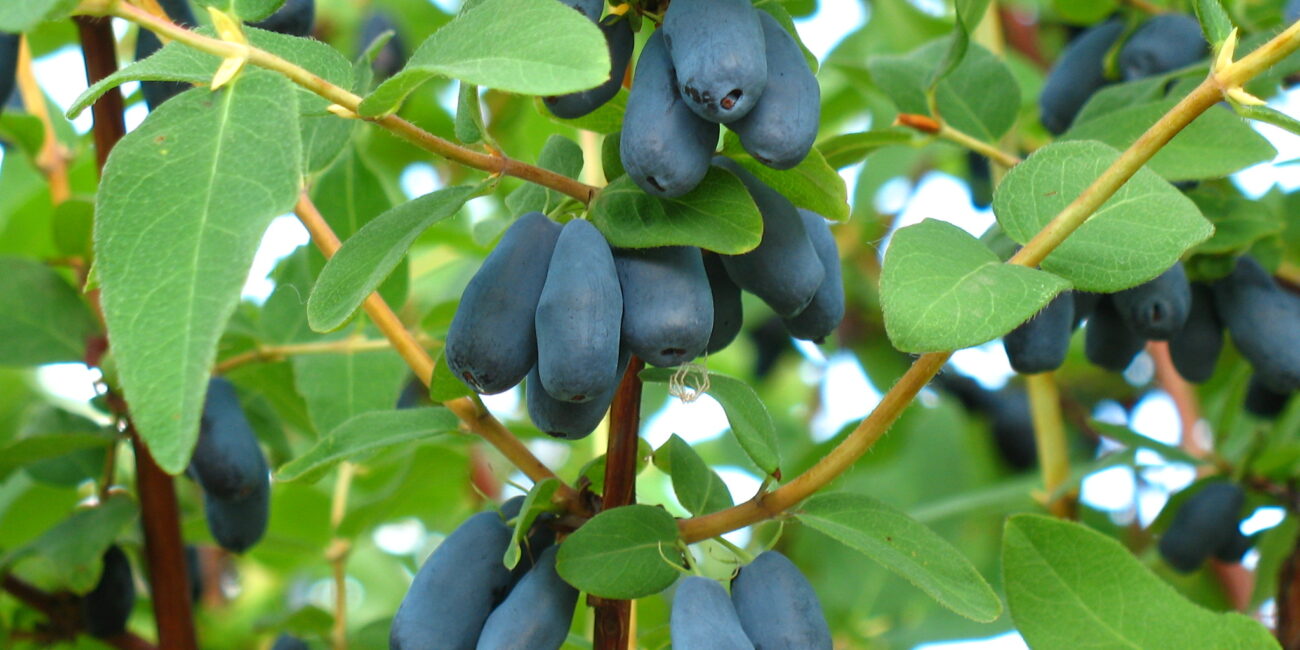
Honeyberries, also known as Haskaps or blue honeysuckle, are one of the earliest fruiting berries of the season. These exceptionally cold-hardy shrubs produce elongated deep blue-purple berries with a sweet-tart flavour often compared to a mix of blueberry and raspberry, though they have a unique taste all their own. Honeyberries are easy to grow, highly productive, and naturally resistant to many pests and diseases, making them an excellent choice for home gardeners. According to the plant tag, Honeyberry ‘Berry Blue’ is also an excellent pollinizer for other Honeyberry varieties and contains even higher antioxidant levels than blueberries.
Common Name
Honeyberry, Haskap
Botanical Name
Lonicera caerulea
Sun Exposure
Full Sun to Partial Shade
Light Requirements
3+ hours of direct sun
Harvest Season
Mid-June to July
Mature Spread
3 – 6 ft (1 – 1.8 m)
Hardiness Zone
Zone 2
Growth Habit
Upright, multi-stemmed deciduous shrub
How to Plant Honeyberries
When to Plant
Honeyberries can be planted in spring or fall. Spring planting is ideal in colder climates, while fall planting works well when soil temperatures remain mild enough for roots to establish before winter.
Where to Plant
Choose a location with full sun for the best fruit production, although plants will tolerate partial shade. Honeyberries prefer well-drained sandy or loamy soil and benefit from good air circulation. Avoid areas where water tends to collect during winter or heavy rainfall.
Spacing & Planting Depth
Space plants approximately 4 to 6 feet apart to allow good airflow and future growth. Dig a planting hole twice the width and depth of the nursery container. Position the plant so the crown sits level with the surrounding soil, then backfill with quality garden soil and water thoroughly. The plant tag specifically recommends keeping the soil evenly moist, especially during the first growing season.
Companion Plants
Honeyberries grow well alongside blueberries, currants, gooseberries, and raspberries, as they enjoy similar growing conditions. Pollinator-friendly perennials planted nearby can also help improve pollination and fruit production.
Other Important Considerations
Honeyberries require cross-pollination for reliable fruit production. The plant tag recommends planting one compatible pollinating variety alongside another for best results. ‘Berry Blue’ is commonly used as a pollinizer for other Honeyberry varieties.
These plants are exceptionally winter hardy and can tolerate temperatures as low as -45°C.
Care Instructions
Light
Honeyberries produce the heaviest crops in full sun but can still perform well in partial shade. More sunlight generally improves berry sweetness and overall yield.
Soil
These shrubs adapt to a wide range of soil types but perform best in fertile, well-drained sandy or loamy soils. Adding compost or organic matter at planting time can help improve moisture retention and soil structure.
Water
Water deeply and consistently, particularly during the first year and while fruit is developing. Mature plants are somewhat drought tolerant once established, but regular moisture encourages larger, juicier berries.
Temperature & Humidity
Honeyberries thrive in cool climates and are among the most cold-tolerant fruiting shrubs available. They handle harsh winters extremely well and do not require high summer heat to produce fruit.
Fertilizer
Apply compost or a balanced slow-release fertilizer in early spring before new growth begins. Avoid excessive nitrogen fertilizer, which can encourage leafy growth at the expense of fruit production.
Other Important Considerations
Pruning is generally minimal during the first few years. Once mature, remove weak, damaged, or overcrowded branches in late winter or early spring to improve airflow and maintain productivity.
Honeyberries flower very early in the season, making them an important early food source for pollinators.
Harvesting Instructions
When to Harvest
Honeyberries are usually ready for harvest from mid-June through July, depending on the variety and climate. They are often one of the first fruits to ripen in the garden, typically earlier than strawberries.
Harvesting Tips
Allow berries to fully darken to a deep blue-purple colour before harvesting. Fully ripe berries should detach easily from the plant and have a sweeter flavour. Harvest gently, as the thin skins can bruise easily.
Managing Pollination & Fruit Production
Since Honeyberries rely on cross-pollination, planting at least two compatible varieties nearby is essential for strong berry production. Bees and early pollinators play an important role during flowering.
Other Important Considerations
Honeyberries are excellent for fresh eating, smoothies, jams, pies, jellies, wine making, freezing, and preserving.
Birds are very attracted to ripe berries, so netting may be necessary as harvest time approaches.
Growing in Pots and Containers
Container Growing
Honeyberries can be grown successfully in large containers with good drainage. Choose a pot at least 18 to 24 inches wide and deep to accommodate root growth.
Watering & Maintenance
Container-grown plants dry out faster than those planted in the ground and will require more frequent watering during warm weather. Consistent moisture is especially important during flowering and fruiting.
Refresh potting soil every few years and apply compost annually to maintain plant vigor.
Growing Multiple Plants for Pollination
Because Honeyberries require cross-pollination, it is best to grow at least two compatible varieties nearby, even in containers.
Other Important Considerations
Place containers in a sunny, sheltered location. In colder climates, containers may need winter protection to prevent root freeze damage.
Overwintering Instructions
Winter Protection
Honeyberries are exceptionally winter hardy and generally require very little winter protection once established. Applying mulch around the base of the plant in late fall can help regulate soil temperature and retain moisture.
Overwintering Container Plants
Container-grown Honeyberries are more vulnerable to extreme cold because roots are exposed above ground. Move containers to a sheltered location or insulate pots during winter to help protect the root system.
Avoid allowing containers to dry out completely during winter dormancy.
Common Pests and Plant Diseases
Common Disease Issues
Honeyberries are naturally resistant to many common fruit plant diseases and are considered relatively low maintenance. Root rot can occasionally occur in poorly drained soils, particularly if plants remain overly wet for extended periods.
Powdery mildew or leaf spot may occasionally appear during humid conditions but are rarely severe.
Common Garden Pests
Birds are the most common issue, especially as berries ripen. Netting is often the best protection. Aphids or scale insects may occasionally appear on young growth, but serious infestations are uncommon. Healthy plants with proper airflow and watering are generally very resilient.
Aphids or scale insects may occasionally appear on young growth, but serious infestations are uncommon. Healthy plants with proper airflow and watering are generally very resilient.