
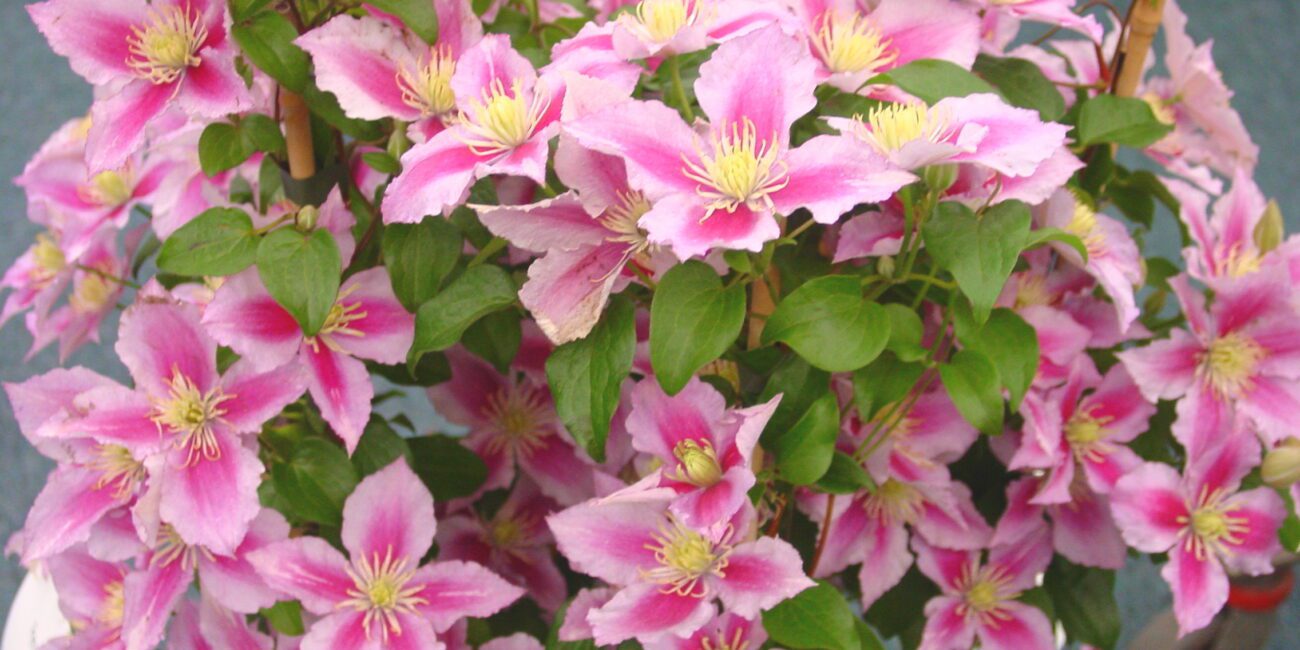
How to Grow and Care for Clematis
Clematis is one of the garden’s most spectacular flowering vines, admired for its elegant blooms, remarkable variety of colours, and ability to transform vertical spaces into stunning focal points. Whether climbing over a trellis, arbor, pergola, fence, or obelisk, clematis provides season-long beauty while adding height and structure to the landscape. With hundreds of varieties available, gardeners can enjoy flowers from early spring through late summer and even into fall. Once established, these hardy vines are long-lived, rewarding gardeners with years of vigorous growth and breathtaking displays.
Clematis
Clematis
Sun Exposure
Full Sun
6+ hours daily
Bloom Season
May, June and September
Mature Spread
1 to 4.5 m (4 to 15 ft)
Hardiness Zone
Zone 3
Growth Habit
Climbing vine
Planting Instuctions
When to Plant
Clematis is best planted in spring or early fall when temperatures are cool and soil conditions encourage healthy root establishment. Planting during these seasons allows the vine to develop a strong root system before the arrival of summer heat or winter cold.
Where to Plant
Choose a location that receives at least six hours of direct sunlight each day while ensuring the root zone remains cool and shaded. A common gardening saying for clematis is “heads in the sun, feet in the shade.” Plant beside a sturdy support such as a trellis, arbor, fence, pergola, or obelisk where the vine can climb naturally as it grows.
Spacing & Planting Depth
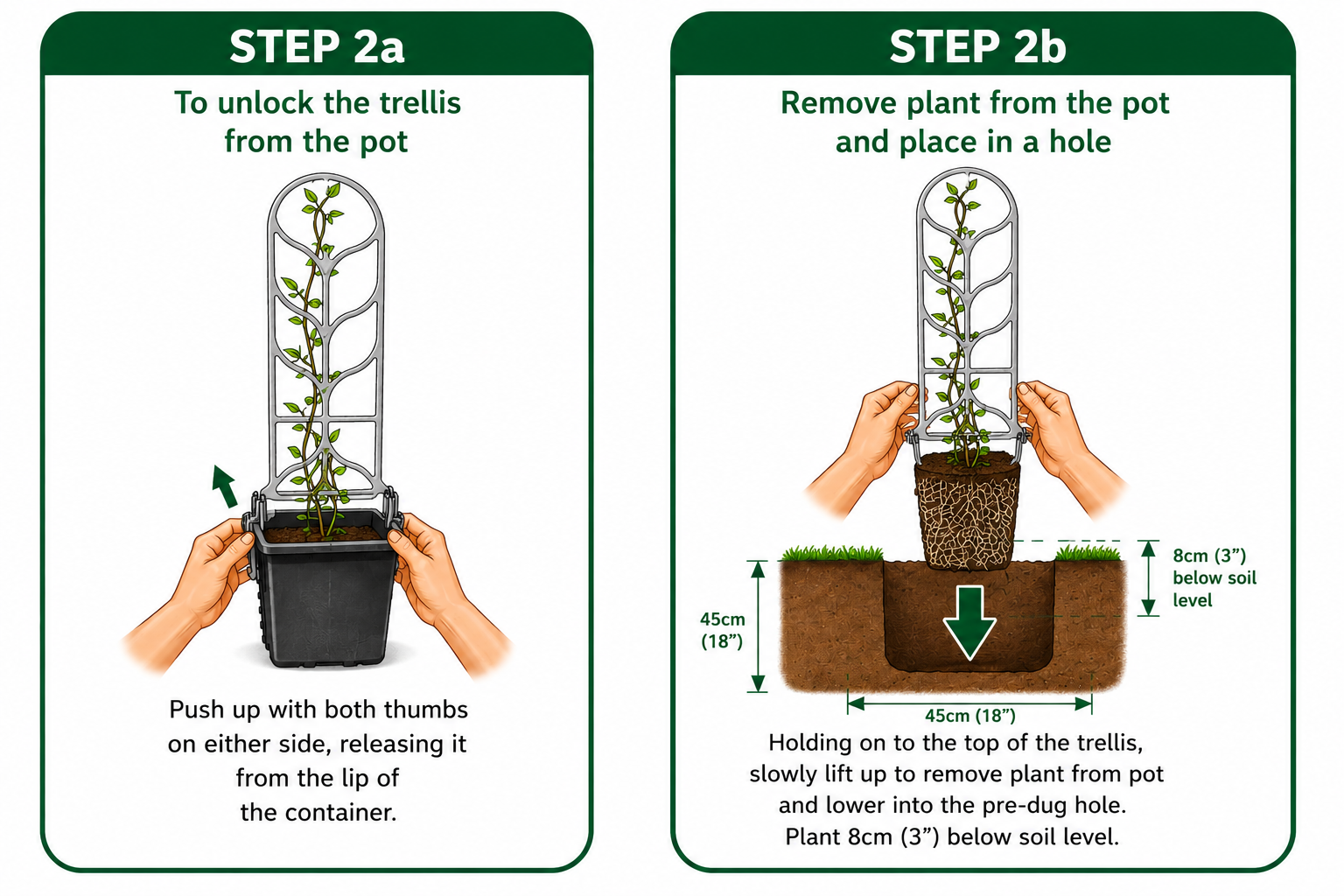
Dig a planting hole approximately 45 cm (18 inches) wide and deep. Position the root ball so the crown sits approximately 8 cm (3 inches) below the finished soil level before backfilling with soil. Firm the soil gently around the roots and water thoroughly after planting. Planting slightly deeper encourages additional stems to develop below the soil surface while providing extra protection against environmental stress and clematis wilt.
Companion Plants
Clematis combines beautifully with many flowering shrubs and perennials. Roses are among its most classic companions, allowing the vine to weave naturally through the shrub while extending the flowering display. Low-growing plants such as hostas, coral bells (Heuchera), hardy geraniums, catmint (Nepeta), lavender, and salvia also make excellent companions by shading the root zone, conserving soil moisture, and creating attractive layered plantings.
Additional Considerations
One of the keys to growing healthy clematis is keeping the root system cool and consistently moist throughout the growing season. Applying a layer of mulch, placing decorative stones around the base of the plant, or surrounding it with low-growing companion plants helps regulate soil temperature while reducing moisture loss. Installing the climbing support before planting also prevents disturbing the roots once the vine has become established.
Care Instructions
Light
Clematis performs best when the foliage receives at least six hours of direct sunlight each day. While the upper growth thrives in full sun, the roots benefit from cooler conditions. Keeping the base of the plant shaded with mulch or nearby companion plants creates the ideal growing environment and encourages vigorous flowering.
Soil
This clematis grows best in fertile, well-drained soil enriched with organic matter. The soil should retain enough moisture to support healthy growth while draining freely to prevent root rot. A neutral to slightly alkaline soil pH is preferred, although most garden soils can be improved with compost before planting.
Water
Keep the soil consistently moist throughout the growing season, particularly while the plant is becoming established. Mature plants are relatively resilient but perform best when deep watering is provided during prolonged dry periods. Water at the base of the plant whenever possible to keep the foliage dry and reduce the risk of fungal diseases.
Temperature & Humidity
Clematis is exceptionally hardy and well suited to Canadian gardens, thriving in climates as cold as Hardiness Zone 3. Good air circulation promotes healthy foliage, while maintaining adequate soil moisture during periods of summer heat helps reduce plant stress and encourages continued flowering.
Fertilizer
Apply a balanced slow-release fertilizer in early spring as new growth begins. Because Pink Fantasy flowers more than once during the growing season, a second light feeding after the first flush of blooms can encourage healthy growth and additional flowering later in the season. Avoid excessive nitrogen, which encourages leafy growth at the expense of flowers.
Additional Care
Pruning requirements vary depending on the clematis variety. Group B varieties require only light pruning in early spring, with occasional harder pruning every few years to rejuvenate the plant. Group C varieties should be cut back to approximately 8 cm (3 inches) above the ground in early spring, leaving two or three healthy buds on each stem. If you are unsure which pruning group your plant belongs to, refer to the information provided on the plant tag before pruning. Young vines may also benefit from gentle guidance onto their support until they begin climbing naturally.
Blooming & Maintenance
When to Expect Flowers
Clematis typically produces its first spectacular display of flowers in May and June before rewarding gardeners with a second flush of blooms in September. This repeat flowering habit makes it an excellent choice for extending seasonal colour in the garden.
Flowering Tips
Healthy flowering begins with proper planting and consistent care. Maintaining evenly moist soil, feeding annually, providing plenty of sunlight for the foliage, and keeping the roots cool all contribute to vigorous growth and abundant blooms. Avoid disturbing the root system once the plant has become established, as mature clematis prefers to remain undisturbed.
Vine Training
During the first growing season, gently guide young shoots onto their support until they begin climbing independently. Clematis naturally climbs by wrapping its leaf stems around narrow supports, making trellises, wire systems, netting, and decorative obelisks ideal choices.
Growing in Pots and Containers
Container Growing
Clematis is well suited to growing in large containers, making it an excellent choice for patios, balconies, courtyards, and smaller gardens. Choose a container with excellent drainage and provide a sturdy trellis or obelisk that allows the vine to reach its full potential.
Watering & Maintenance
Container-grown plants dry out more quickly than those growing in the ground and require more frequent watering during warm weather. Keep the soil consistently moist without allowing it to become saturated, and fertilize regularly throughout the growing season to support vigorous growth and repeat flowering.
Supporting Container Plants
Install the support structure securely within the container before planting. As new shoots develop, gently guide them onto the support until the vine begins climbing naturally.
Additional Considerations
Because container plants are more exposed to temperature extremes, protecting the root system becomes especially important. Keeping the container shaded or planting low-growing companion plants around the base helps maintain cooler soil temperatures throughout the summer months.
Overwintering Instructions
Winter Protection
Once the ground has frozen, apply a layer of organic mulch approximately 5 to 10 cm (2 to 4 inches) deep around the base of the plant. This helps insulate the root system, conserve moisture, and reduce damage caused by repeated freeze-thaw cycles. Delay pruning until the appropriate time for your plant’s pruning group.
Overwintering Container Plants
Container-grown clematis benefits from additional winter protection because the roots are more exposed than those growing in the ground. Move containers to a sheltered, unheated location if possible, or insulate the container with burlap or another breathable material. Water sparingly throughout winter, ensuring the soil remains only slightly moist.
Common Pests and Plant Diseases
Common Disease Issues
Clematis is generally a healthy and dependable garden plant, although it can occasionally be affected by fungal diseases. Clematis wilt is the most recognized issue and may cause stems to collapse suddenly, particularly on large-flowered varieties. Healthy plants often recover by producing new shoots from below ground. Powdery mildew and leaf spot may also occur during periods of prolonged humidity or poor air circulation. Good spacing, proper watering practices, and keeping foliage dry help minimize disease pressure.
Common Garden Pests
Young shoots may occasionally attract aphids, spider mites, slugs, and snails, particularly during warm or damp weather. Regular inspection allows these pests to be managed before they become established. Healthy growing conditions encourage vigorous plants that are naturally more resistant to pest problems.
With proper planting, thoughtful pruning, and consistent care, Clematis will reward gardeners with spectacular displays of elegant blooms for many years. Whether climbing over a garden arbor, softening a fence line, or adding height to a patio container, this beautiful vine brings timeless beauty, graceful colour, and lasting charm to landscapes of every size.