
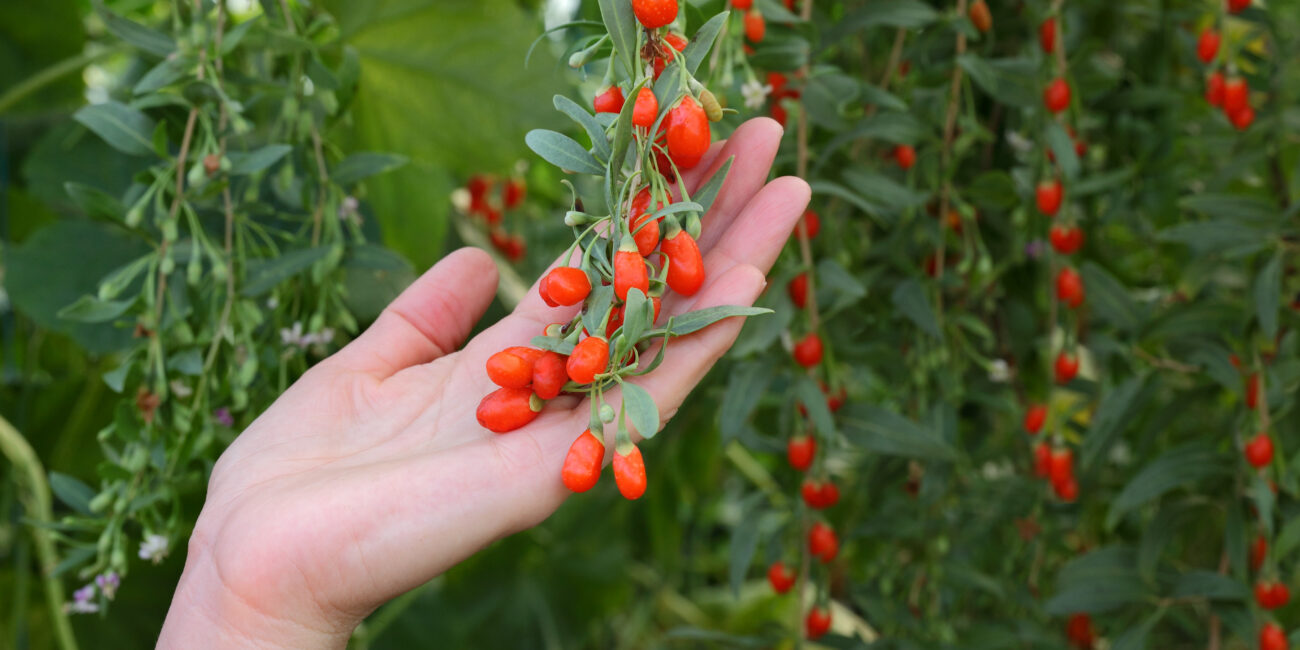
How to Grow and Care for Goji Berries
Goji berries are vigorous, fruit-producing shrubs known for their bright red berries, antioxidant-rich fruit, and long harvest season. They are easy to grow in many Canadian climates and work especially well along fences or trellises where their arching stems can be supported naturally. The berries have a sweet, slightly tangy flavour and can be eaten fresh, dried, or added to smoothies, teas, and baking. The plant tag also notes that goji berries are ideal on a fence and thrive in full sun.
Common Name
Goji Berry
Botanical Name
Lycium barbarum
Sun Exposure
Full Sun to Partial Shade
Light Requirements
6+ hours of direct sun
Harvest Season
August to September
Mature Spread
1 – 3 m (3 – 10 ft)
Hardiness Zone
Zone 2 to 3
Growth Habit
Upright, arching shrub with long canes
How to Plant Goji Berries
When to Plant
Plant goji berries in spring or early fall when temperatures are mild and the soil is workable. Spring planting is often preferred in colder climates because it gives the plant an entire growing season to establish before winter.
Where to Plant
Choose a location with excellent drainage and plenty of sunlight. Goji berries tolerate partial shade, but full sun encourages stronger growth and heavier fruit production. These plants perform especially well along fences, trellises, or support wires where the long canes can be trained upright.
Avoid planting in heavy clay or waterlogged soil. The plant tag specifically recommends removing clay or gravel from the planting area before backfilling.
Spacing & Planting Depth
Space plants approximately 1.5 to 2 m (5 to 6 ft) apart to allow for airflow and mature growth. Dig a planting hole at least twice as wide and deep as the container. Position the plant so the original soil line sits level with the surrounding ground.
Backfill gently while watering to remove air pockets around the roots. Adding premium garden soil or compost can help improve soil structure and root establishment.
Companion Plants
Goji berries grow well alongside other sun-loving edibles such as blueberries, currants, gooseberries, raspberries, lavender, echinacea, and pollinator-friendly perennials. Avoid planting too close to aggressive spreaders that may compete for moisture and nutrients.
Other Important Considerations
Goji berry plants can become sprawling if left unsupported. Training them along a fence or trellis improves airflow, keeps fruit cleaner, and makes harvesting easier. Applying mulch around the base of the plant helps suppress weeds, conserve moisture, and insulate the roots during winter. The plant tag recommends maintaining a mulch layer approximately 4 to 6 cm (2 to 3 inches) thick.
Care Instructions
Light
Goji berries perform best in full sun and produce the heaviest crops when they receive at least 6 hours of direct sunlight daily. They will tolerate partial shade, though fruit production may decrease.
Soil
These plants prefer loose, well-draining soil with moderate fertility. Slightly sandy or loamy soil is ideal. Goji berries tolerate a range of soil types but dislike soggy conditions or compacted clay soils.
Water
Keep newly planted goji berries consistently moist during their first growing season while roots establish. Once mature, the plants become relatively drought tolerant and require less frequent watering. The plant tag also cautions against overwatering established plants.
Deep watering once or twice weekly during hot, dry weather is usually sufficient.
Temperature & Humidity
Goji berries are highly cold hardy and perform well in Canadian climates. They tolerate winter cold very well once established and are generally not bothered by humidity as long as airflow is good around the plant.
Fertilizer
Apply compost or a balanced slow-release fertilizer in early spring as new growth begins. Avoid excessive nitrogen fertilizer, which may encourage leafy growth at the expense of fruit production.
Other Important Considerations
Pruning is important for maintaining shape, airflow, and fruit production. Remove weak, damaged, or overcrowded canes in late winter or early spring. Mature plants benefit from annual thinning to encourage vigorous new fruiting wood.
Harvesting Instructions
When to Harvest
Goji berries are typically ready for harvest from August through September. The berries should be fully coloured bright red or orange-red before picking.
Harvesting Tips
Harvest gently by hand when berries are soft and fully ripe. Fresh goji berries bruise easily, so handle them carefully. They can be eaten fresh, dried for storage, or frozen for later use.
Regular harvesting encourages continued fruit production throughout the season.
Managing Canes & Growth
Goji berry plants naturally produce long arching canes that may spread outward over time. Pruning and tying canes to supports helps control growth and improve fruit access.
Other Important Considerations
Birds are often attracted to ripening berries. Netting may be helpful if wildlife pressure becomes an issue during harvest season.
Growing in Pots and Containers
Container Growing
Goji berries can be grown successfully in large containers, especially compact or younger plants. Choose a pot with excellent drainage and enough depth for root development. Containers should be at least 18 to 24 inches wide and deep.
Using a trellis or stake inside the container helps support upright growth.
Watering & Maintenance
Container-grown plants dry out more quickly than garden-grown plants and may require more frequent watering during summer. Water deeply whenever the top few inches of soil begin to dry out.
Refresh the soil every few years and apply compost annually to maintain healthy growth.
Propagation & New Growth
Goji berries can produce new shoots from the base of the plant as they mature. These can sometimes be divided or propagated once well established.
Other Important Considerations
Place containers in the sunniest location possible for the best berry production. During extremely hot weather, container plants may benefit from light afternoon shade to reduce stress.
Overwintering Instructions
Winter Protection
Established goji berry plants are very winter hardy and typically require little protection in the ground. Applying mulch around the root zone in late fall helps stabilize soil temperatures and protect roots during freeze-thaw cycles.
Avoid heavy pruning late in the season, as this can stimulate tender new growth before winter.
Overwintering Container Plants
Container-grown goji berries are more vulnerable to winter cold because roots are exposed above ground. Move pots into a sheltered area such as an unheated garage, shed, or protected corner during severe winter weather.
Water sparingly throughout winter so the soil does not completely dry out.
Common Pests and Plant Diseases
Common Disease Issues
Goji berries are generally resilient plants but may occasionally experience powdery mildew, leaf spot, or root rot in poorly drained soils. Good airflow, proper spacing, and avoiding overhead watering help reduce disease pressure.
Overwatering is one of the most common causes of plant stress and root problems.
Common Garden Pests
Aphids, spider mites, and whiteflies may occasionally feed on tender new growth. Birds are also very attracted to ripening berries.
Inspect plants regularly throughout the growing season and treat infestations early with insecticidal soap or a strong spray of water if needed. Healthy, well-maintained plants are typically quite resilient once established.