
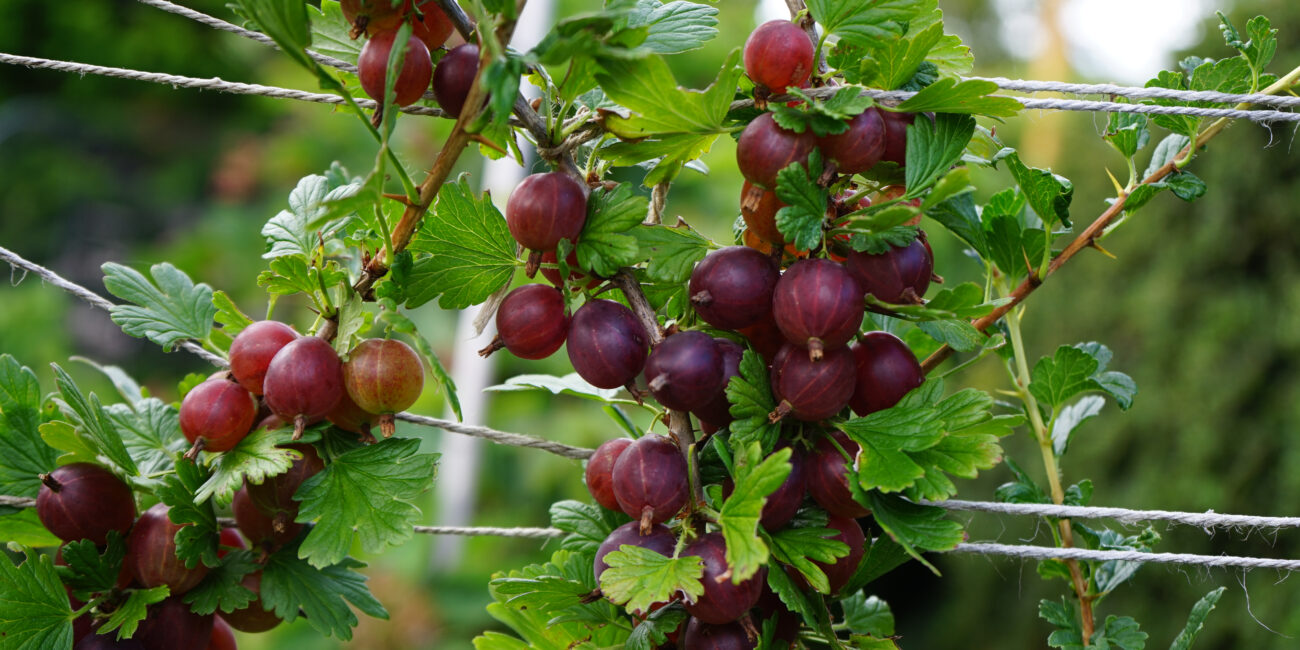
How to Grow and Care for Gooseberries
Gooseberries are hardy, productive fruiting shrubs prized for their tart-sweet berries that are excellent fresh, baked into pies, or made into jams and jellies. The compact variety ‘Little Ben’ is especially well suited for smaller gardens and container growing, producing large, sweet red berries on a dwarf plant. Gooseberries are vigorous growers and highly productive once established.
Common Name
Gooseberry
Botanical Name
Ribes uva-crispa
Sun Exposure
Full Sun to Partial Shade
Light Requirements
3 to 6+ hours daily
Harvest Season
July to August
Mature Spread
60-90 cm (2-3 ft)
Hardiness Zone
Zone 1-3
Growth Habit
Compact, bushy, deciduous
How to Plant Gooseberries
Gooseberries are extremely hardy and can be planted as soon as the ground can be worked in early spring. Fall planting is also suitable in milder regions, allowing roots to establish before winter dormancy.
Where to Plant
Choose a location with fertile, well-drained soil and good air circulation. Gooseberries perform best in full sun, especially in cooler climates, though they tolerate partial shade well. In hotter summer regions, some afternoon shade can help prevent heat stress and sunscald on fruit.
Spacing & Planting Depth
Space plants approximately 90 to 120 cm (3 to 4 ft) apart to allow for airflow and future growth. Plant at the same depth as the nursery container and water thoroughly after planting. Adding mulch around the base helps conserve moisture and suppress weeds.
Companion Plants
Gooseberries grow well alongside currants, honeyberries, blueberries, and other edible shrubs with similar growing requirements. Pollinator-friendly flowers such as lavender, yarrow, and chives also make excellent companions by attracting beneficial insects.
Other Important Considerations
Gooseberries are vigorous growers and benefit from yearly thinning and pruning to prevent overcrowding. Without regular pruning, dense growth can reduce airflow and fruit production.
Care Instructions
Light
For the highest fruit production, provide full sun exposure. Gooseberries can tolerate partial shade, especially in warmer climates, but reduced sunlight may slightly decrease yields.
Soil
Gooseberries prefer fertile, loamy, well-drained soil with a pH between 6.0 and 7.0. Avoid heavy clay soils that remain overly wet, as excessive moisture can contribute to root issues.
Water
Keep newly planted gooseberries consistently moist during their first growing season while roots establish. Once mature, the plants become more drought tolerant and require less frequent watering. Avoid overwatering, particularly in poorly drained soil.
Temperature & Humidity
Gooseberries thrive in cooler climates and are exceptionally cold hardy. They tolerate harsh Canadian winters very well and generally perform best in areas without prolonged extreme summer heat or humidity.
Fertilizer
Apply compost or a balanced slow-release fertilizer in early spring as new growth begins. Excessive nitrogen should be avoided, as it can encourage leafy growth at the expense of fruit production.
Additional Care Considerations
Annual pruning is essential for maintaining productivity and plant health. Remove older stems, weak growth, and crowded interior branches during late winter or early spring to improve airflow and encourage vigorous new fruiting wood.
Harvesting Instructions
When to Harvest
Gooseberries are typically ready for harvest from July through August, depending on climate and variety. Fruit colour and softness are the best indicators of ripeness. ‘Little Ben’ produces large sweet berries that develop a rich red colour when mature.
Harvesting Tips
Harvest berries carefully by hand once they are fully coloured and slightly soft to the touch. Gooseberries can be used fresh or processed into pies, preserves, sauces, and jellies. Picking regularly during the season encourages continued ripening.
Managing Growth
Unlike strawberries, gooseberries do not produce runners. Instead, maintenance focuses on annual pruning and thinning to prevent the shrub from becoming too dense.
Other Important Considerations
Birds are often attracted to ripening fruit. Netting may help protect your crop if bird activity becomes heavy during harvest season.
Growing in Pots and Containers
Container Growing
Compact gooseberry varieties such as ‘Little Ben’ are excellent for container growing. Choose a large container with drainage holes and use a high-quality potting mix blended with compost for best results.
Watering & Maintenance
Container-grown gooseberries dry out more quickly than garden-planted shrubs and should be checked regularly during warm weather. Water deeply when the top few centimetres of soil begin to dry out. Annual pruning and occasional repotting will help maintain plant vigor.
Propagation & Growth Management
Gooseberries are commonly propagated through hardwood cuttings rather than runners. Pruning helps maintain an open, manageable shape and encourages productive fruiting stems.
Other Important Considerations
Containers should be large enough to insulate roots from summer heat and winter cold. Mulching the soil surface can help retain moisture and regulate temperature.
Overwintering Instructions
Winter Protection
Gooseberries are extremely hardy and generally require little winter protection once established. Applying mulch around the root zone in late fall helps stabilize soil temperatures and conserve moisture through winter.
Overwintering Container Plants
Container-grown gooseberries benefit from extra winter protection because roots are more exposed to freezing temperatures. Move containers to a sheltered area or insulate the pots during severe cold spells.
Common Pests and Plant Diseases
Common Disease Issues
Gooseberries may occasionally experience powdery mildew, leaf spot, or root rot in poorly drained soils. Good airflow, proper spacing, and avoiding overhead watering help reduce disease risk.
Common Garden Pests
Aphids, sawfly larvae, spider mites, and birds can occasionally affect gooseberry plants. Regular inspection and prompt treatment help prevent larger infestations. Healthy, properly pruned plants are generally more resilient to pest pressure.