
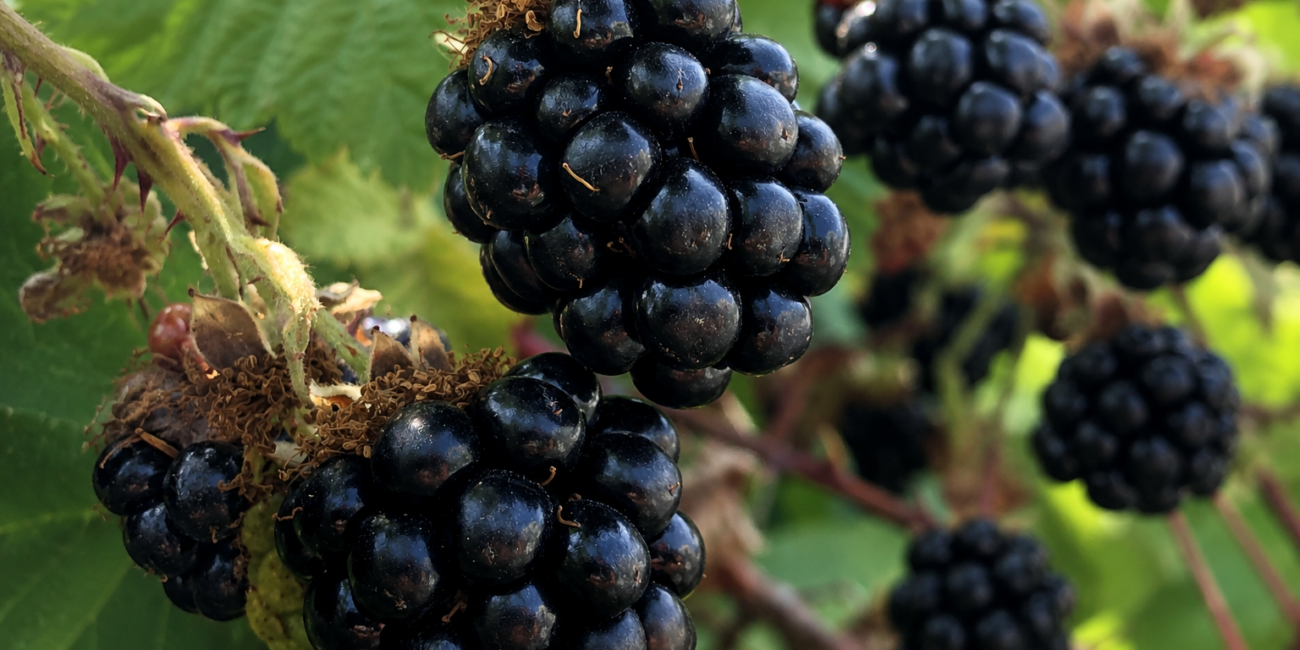
How to Grow and Care for Your Black Raspberries
Black raspberries are vigorous fruiting plants known for their rich flavour, deep black fruit, and productive summer harvests. They produce large, firm berries that are excellent for fresh eating, jams, pies, and preserves. Their arching canes benefit from support systems and regular pruning to encourage healthy growth and reliable harvests year after year. Black raspberries are self-pollinating and well suited to home gardens, edible landscapes, and larger berry plantings.
Common Name
Black Raspberry
Botanical Name
Rubus occidentalis
Sun Exposure
Full Sun to Partial Shade
Light Requirements
3+ hrs daily
Harvest Season
July to August
Mature Spread
Approx. 4 ft
Hardiness Zone
Zone 4A
Growth Habit
Upright to Arching
Planting Instructions
When to Plant
Black raspberries are best planted in early spring or early fall when temperatures are cooler and the soil is workable. Spring planting is especially beneficial in colder climates because it allows roots to establish before winter.
Where to Plant
Choose a location with full sun for the best fruit production, though black raspberries can tolerate partial shade. Good air circulation is important to help reduce moisture-related disease issues. Well-drained soil is essential, as consistently wet conditions may lead to root problems and poor plant performance.
Spacing & Planting Depth
Space plants approximately 3 to 4 feet apart to allow room for airflow and cane development. Dig a planting hole at least twice the width and depth of the nursery pot. Place the plant so the original soil line sits level with the surrounding ground. Gently firm the soil while backfilling and water thoroughly to eliminate air pockets.
Companion Plants
Black raspberries pair well with pollinator-friendly perennials and herbs such as yarrow, chives, bee balm, and marigolds. These plants help attract beneficial insects while adding diversity to the garden. Avoid planting near wild brambles or areas where tomatoes, potatoes, or peppers have recently grown due to potential disease transfer.
Other Important Considerations
Black raspberries benefit from trellises or wire supports to help manage their long canes and improve airflow. Mulch is highly recommended around the base of the plants to help retain moisture, reduce weeds, and insulate roots during winter months. Apply a mulch layer approximately 2 to 3 inches thick while keeping mulch slightly away from the crown of the plant.
Care Instructions
Light
Black raspberries perform best in full sun where they receive at least 6 hours of direct sunlight daily. Plants grown in sunnier locations typically produce sweeter berries and heavier crops.
Soil
Rich, fertile, well-drained soil is ideal. Black raspberries prefer slightly acidic soil and benefit from organic matter mixed into the planting area before planting. Heavy clay or compacted soils should be improved to encourage healthy root development.
Water
Keep newly planted black raspberries consistently moist during their first growing season. Once established, watering requirements decrease, though plants still benefit from regular deep watering during hot weather and fruit production. Avoid overwatering, as excessively wet soil may contribute to root disease.
Temperature & Humidity
Black raspberries are hardy plants suited for colder Canadian climates. They tolerate winter conditions well once established but benefit from good airflow during warm, humid periods to help reduce fungal issues.
Fertilizer
Apply compost or a balanced fertilizer in early spring as new growth begins. Excessive fertilization should be avoided, particularly with high-nitrogen fertilizers, as this can encourage excessive leafy growth instead of fruit production.
Additional Care Considerations
Regular pruning is essential for healthy black raspberry plants. Remove old fruiting canes after harvest to encourage strong new cane growth for the following season. Tipping new canes during summer may also help promote branching and improve future yields.
Harvesting Instructions
When to Harvest
Black raspberries are generally ready for harvest from July through August. Berries should be harvested once they turn fully black, glossy, and detach easily from the plant.
Harvesting Tips
Pick berries every few days during peak harvest season to maintain fruit quality and reduce losses from overripe berries. Freshly harvested fruit is delicate and should be handled gently to avoid bruising.
Managing Canes
Black raspberries produce fruit on second-year canes. Once a cane has completed fruiting, it should be removed to direct the plant’s energy toward new cane growth that will produce the following year’s crop. Proper cane management improves airflow and helps maintain vigorous growth.
Other Important Considerations
Birds are highly attracted to ripe berries and may require deterrents or netting during harvest season. Consistent harvesting also encourages cleaner plants and helps reduce pest activity around overripe fruit.
Growing Black Raspberries in Pots & Containers
Container Growing
Black raspberries can be grown in large containers provided they receive enough sunlight and consistent watering. Use a sturdy pot with excellent drainage and enough space for root development. A trellis or stake is recommended to support cane growth.
Watering & Maintenance
Container-grown plants dry out faster than garden-grown plants and require more frequent watering during warm weather. Soil should remain consistently moist but never soggy. Regular feeding throughout the growing season will help support healthy growth and fruit production.
Growing from Cane Tips
Black raspberries naturally propagate through tip layering, where cane tips root once they contact soil. In container settings, these canes should be monitored and pruned as needed to keep growth manageable and tidy.
Other Important Considerations
Container-grown plants may require additional winter protection because roots are more exposed to freezing temperatures. Repotting every few years can also help maintain healthy root systems and continued productivity.
Overwintering Instructions
Winter Protection
Apply mulch around the base of black raspberry plants before winter to help protect roots from freezing and thawing cycles. In colder or windy locations, canes may benefit from being tied loosely to supports for additional stability through winter storms.
Overwintering Container Plants
Container-grown black raspberries should be moved to a sheltered location during winter whenever possible. Containers may also be insulated to help protect roots from extreme cold. Water occasionally during dry winter periods to prevent roots from drying out completely.
Common Pests and Plant Diseases
Common Disease Issues
Black raspberries can occasionally experience fungal diseases such as anthracnose, cane blight, powdery mildew, and root rot. Good spacing, proper pruning, and avoiding overly wet conditions all help reduce disease pressure. Removing old canes promptly after harvest is also important for maintaining plant health.
Common Garden Pests
Common pests include aphids, spider mites, Japanese beetles, raspberry cane borers, and birds feeding on ripening fruit. Regular inspection of plants throughout the growing season helps identify problems early before they become more severe.