
How to Grow and Care for Your Everbearing Strawberries
Easy to grow and highly rewarding, Everbearing Strawberries produce delicious fruit throughout the summer and return year after year with proper care. Perfect for garden beds, raised planters, hanging baskets, and patio containers. Strawberries are high in
Vitamin C and rich in fibre. This variety produces sweet, delicious berries all season long. Ideal for pies, jams and eating fresh.
Common Name
Everbearing Strawberries
Botanical Name
Fragaria × Ananassa
Sun Exposure
Full Sun to Partial Shade
Light Requirements
6+ hours preferred
Harvest Season
June to September
Mature Spread
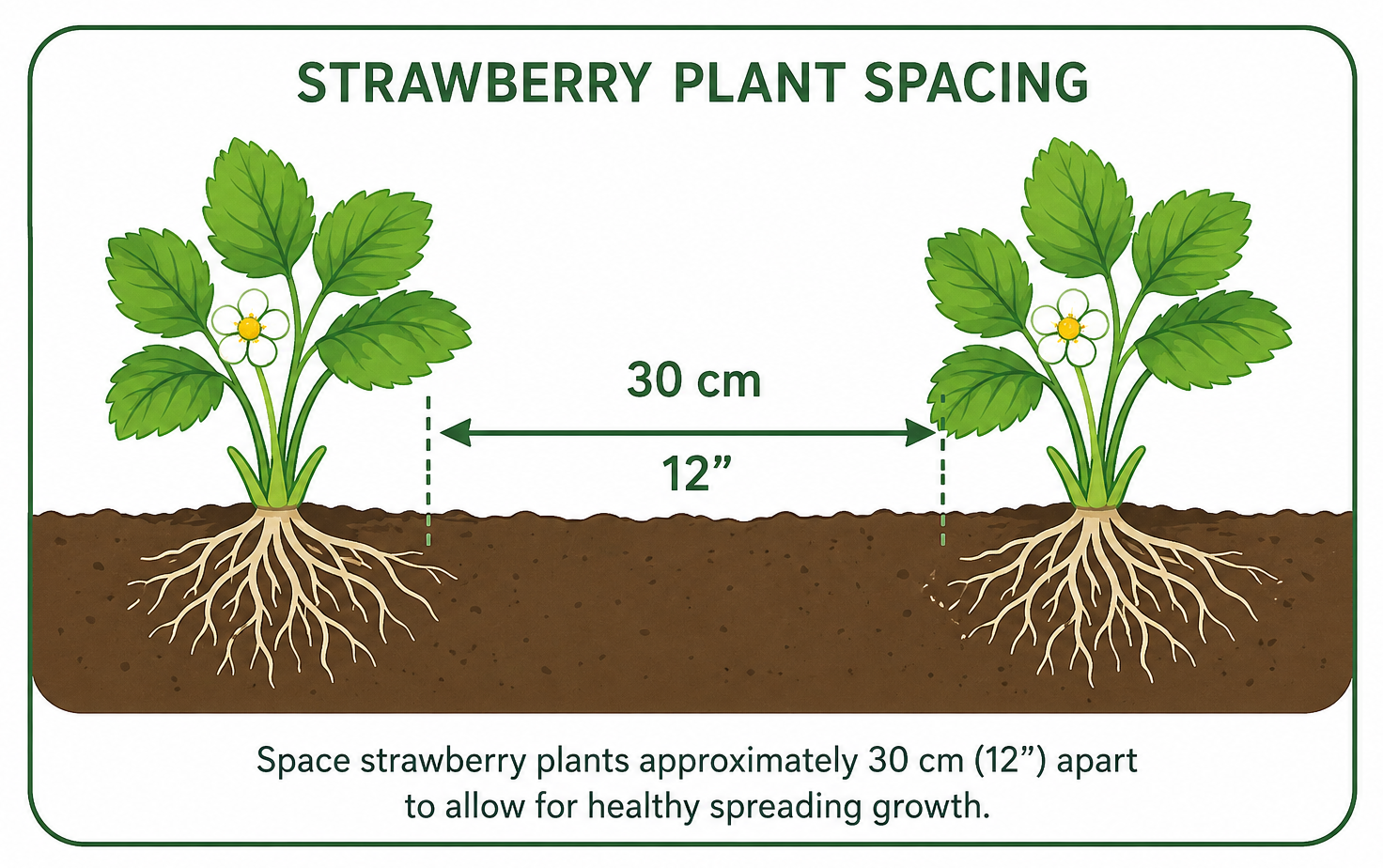
Approx. 30 cm (12″) per plant
Hardiness Zone
Zone 3
Growth Habit
Spreading
Planting Instructions
When to Plant
For the best results, plant strawberries in early spring once the soil becomes workable and the risk of severe frost has passed. Getting plants established early in the season helps encourage stronger growth and better fruit production throughout summer.
Where to Plant
Strawberries perform best in a sunny location with at least 6 hours of direct sunlight each day. They prefer well-drained soil enriched with compost or organic matter. In warmer climates, some light afternoon shade can help protect plants during periods of intense summer heat.
Choose a planting area that provides enough room for plants to spread while still remaining easy to maintain and harvest.
Spacing & Planting Depth
Strawberries naturally spread by producing runners, so proper spacing is important for healthy growth and airflow. Plant approximately 30-45 cm (12-18”) apart to allow plants room to fill in over time.
When planting, position the crown level with the soil surface. Planting too deeply may lead to rot, while planting too shallow can expose the roots and dry the plant out.
Strawberries also grow exceptionally well in raised beds, hanging baskets, and patio containers, where drainage and spacing are easier to control.
Companion Plants
Strawberries grow well alongside companion plants such as chives, thyme, spinach, lettuce, and borage.
These plants can help attract pollinators while making efficient use of garden space.
Avoid planting strawberries near tomatoes, potatoes, or peppers, as they may share similar soil-borne diseases.
Care Instructions
Light
Strawberries grow and produce best in a location that receives at least 6 hours of direct sunlight each day. Full sun encourages stronger growth, better flowering, and sweeter fruit throughout the season.
In particularly warm climates, some light afternoon shade can help protect plants from excessive heat and reduce stress during the hottest part of summer.
Soil
Rich, well-drained soil is essential for healthy strawberry plants and strong fruit production. Before planting, work compost or organic matter into the soil to improve drainage and add nutrients.
Strawberries prefer soil that is slightly acidic to neutral. Avoid heavy or overly wet soils, as consistently soggy conditions can lead to root rot and other disease issues.
Water
Consistent watering is important, especially during flowering and fruit production. Keep the soil evenly moist during the growing season, particularly during periods of hot or dry weather.
While strawberries enjoy regular moisture, they do not like sitting in waterlogged soil. Good drainage helps prevent root problems and supports healthier plants.
Applying mulch around plants can also help retain moisture and keep fruit cleaner.
Temperature & Humidity
Strawberries are hardy plants that perform well across a wide range of climates, including colder Canadian growing regions. They grow best in moderate temperatures with good airflow around the plants.
Hot, dry conditions may require additional watering during summer, while excessive humidity and poor airflow can increase the risk of fungal problems.
Fertilizer
Strawberries benefit from nutrient-rich soil prepared with compost or organic matter before planting. This often provides enough nutrition for healthy growth throughout the season.
If additional feeding is needed, apply a balanced fertilizer during the growing season according to label directions. Avoid over-fertilizing, as excessive leaf growth may reduce fruit production.
Harvesting Instructions
When to Harvest
With proper care and growing conditions, strawberries can produce fruit throughout much of the growing season, typically from early summer into fall. Berries are ready to harvest once they are fully red, fragrant, and slightly soft to the touch.
For the best flavor and sweetness, allow strawberries to ripen fully on the plant before picking.
Harvesting Tips
Regular harvesting encourages plants to continue flowering and producing additional fruit throughout the season. Check plants frequently during peak harvest periods, as ripe berries can develop quickly during warm weather.
When harvesting, gently pick the berry while leaving the green cap attached. Remove any damaged or overripe fruit promptly to help keep plants healthy and productive.
Managing Runners
As strawberry plants grow, they naturally produce runners that spread outward and develop into new plants. While runners are useful for expanding your strawberry patch, removing excess runners during the growing season can help direct more energy into fruit production.
If desired, healthy runners can be rooted into small pots or replanted elsewhere in the garden to establish new plants for future seasons.
Growing Everbearing Strawberries in Pots
Container Growing
Strawberries grow exceptionally well in containers and are an excellent choice for patios, balconies, raised planters, and hanging baskets. Growing in pots also helps keep plants tidy and makes harvesting easier throughout the season.
Choose a large container with good drainage and allow enough room for plants to spread naturally as they grow. Using a high-quality potting mix enriched with organic matter will help support healthy growth and fruit production.
Watering & Maintenance
Container-grown strawberries typically require more frequent watering than plants grown in the ground, especially during hot summer weather. Keep the soil consistently moist, but avoid allowing containers to become waterlogged.
Plastic, resin, or glazed containers often retain moisture more effectively than terracotta pots, which tend to dry out more quickly in warm conditions.
Growing from Runners
Strawberry plants naturally produce runners that can be rooted into small pots to create new plants. Once established, these young plants can be transplanted into larger containers or garden beds for future harvests.
Overwintering Instructions
Winter Protection
Strawberries are perennial plants that can return year after year with proper winter protection. In milder climates, plants may successfully overwinter outdoors in the garden, especially when protected with a layer of mulch applied in late fall.
In colder regions, additional protection may be beneficial during periods of extreme freezing temperatures. Mulch helps insulate the roots and reduce damage caused by repeated freezing and thawing throughout winter.
Overwintering Container Plants
Container-grown strawberries are more exposed to cold temperatures than plants grown directly in the ground and may require extra protection during winter. Pots can be moved to a sheltered location such as an unheated garage, shed, or protected patio area until spring returns.
Strawberry runners can also be rooted into small pots and overwintered indoors or in a protected space for planting the following season. This is an easy way to establish healthy new plants for future harvests.
Common Pests and Plant Diseases
Common Disease Issues
Strawberries are generally easy to grow, but like many fruiting plants, they can occasionally experience issues such as fungal diseases, root rot, leaf spot, or mildew. Good growing conditions are the best defense against most problems.
Planting in well-drained soil, providing good airflow between plants, and avoiding excessive watering can help keep plants healthy throughout the growing season. Regularly removing damaged leaves or overripe fruit will also help reduce potential disease issues.
Common Garden Pests
Strawberries may occasionally attract common garden pests such as slugs, aphids, spider mites, or strawberry weevils. Birds are also especially attracted to ripening fruit and may feed on berries as they mature.
Checking plants regularly for signs of damage allows problems to be caught early before they become more serious.
In many cases, pests can be managed with simple garden maintenance, hand removal, or protective netting when needed. Healthy, well-maintained plants are typically more resilient and productive throughout the season.